What to Wear for a Dawn Balloon Flight on the Serengeti
One morning takes you from a cold open vehicle to a burner overhead to full breakfast sun, and most people dress for only one of those three.
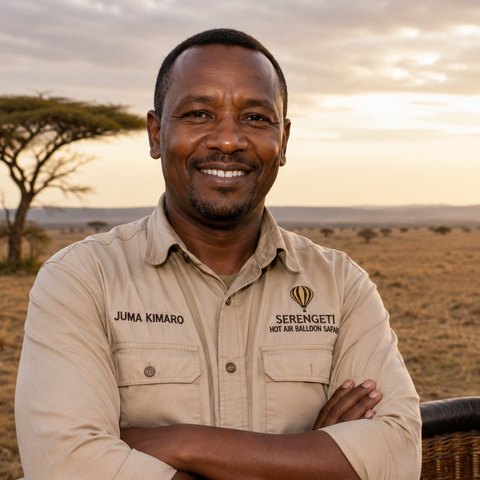 By Juma Kimaro, Serengeti balloon safari specialist since 2015
Short answer
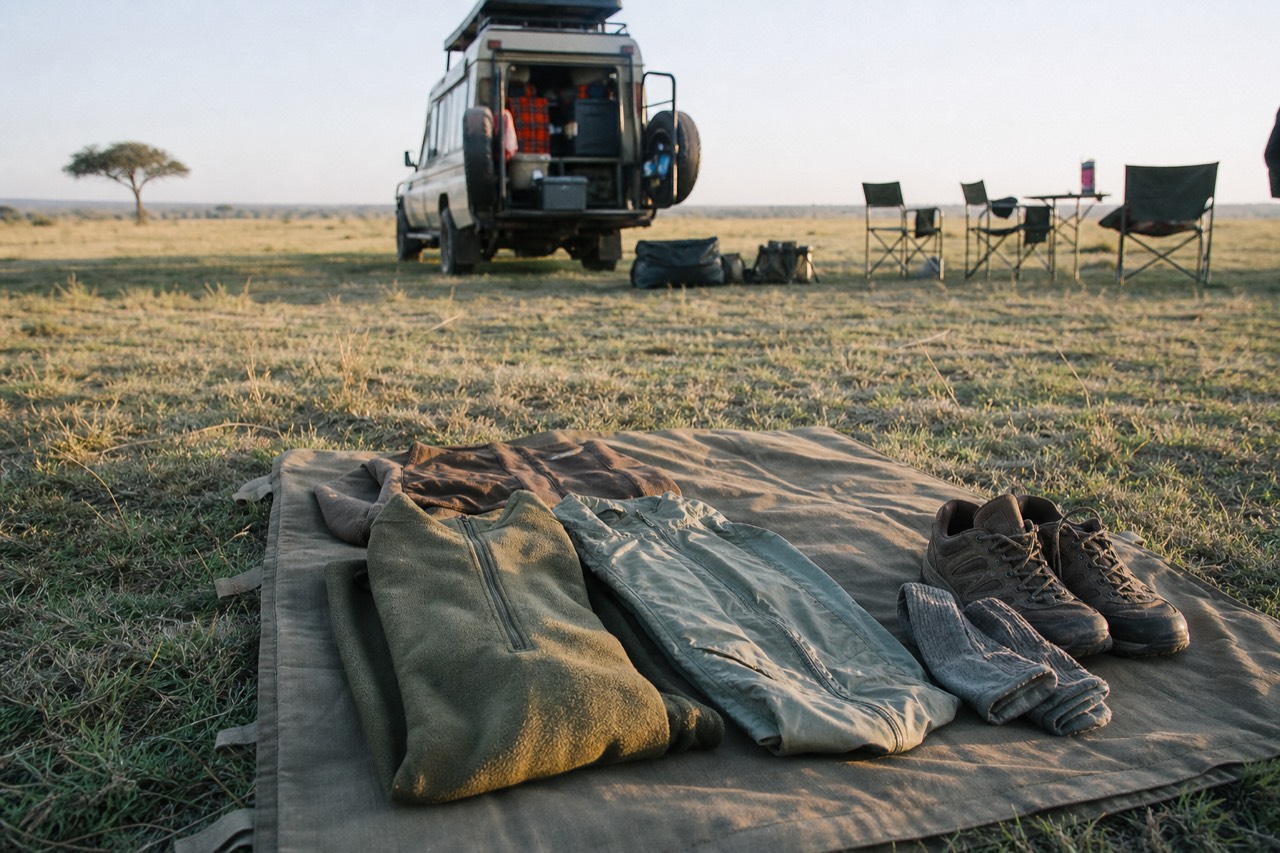
Dress in three layers you can shed: a long-sleeve base, a fleece or light down mid-layer, and a wind shell for the drive. Pickup runs 4:30 to 6:00 am, when dry-season dawns are genuinely cold, and by breakfast you will be standing in strong sun. Wear closed, flat shoes for the landing, bring a hat for after you land, and stick to neutral colours.
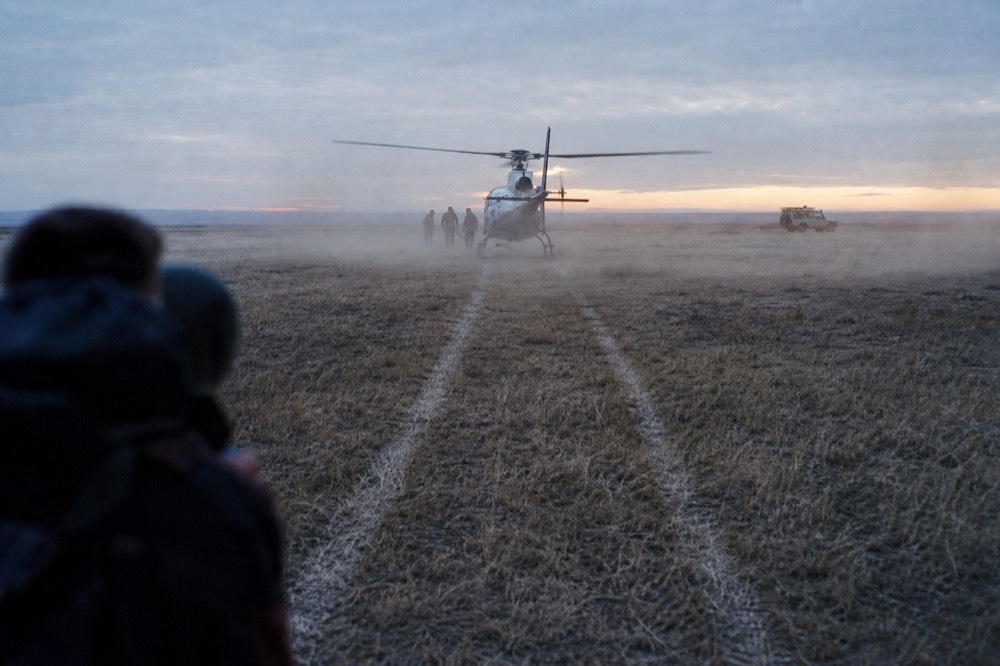
At five in the morning on the Serengeti the grass is wet, your breath shows, and the open vehicle taking you to the launch site has no doors. Two hours later you are eating eggs in direct equatorial sun with a fleece tied round your waist, wondering why you brought a scarf. The whole flight lives in that swing, and dressing for it is less about fashion rules than about a temperature curve that moves faster than any other morning of your trip.
Most packing advice for Tanzania is written for game drives. A balloon morning is a harder problem: colder at the start, hotter at the end, with a burner radiating heat directly over your head in the middle and a landing that can put you on your knees in dry grass.
Booking-rule update (17 September 2026): SBS’s direct FAQ says age six, but the linked Viator product requires seven. Miracle’s Viator product excludes under 120 cm and over 120 kg. Use the terms attached to the exact booking.
Pack for the whole morning: the camp transfer, standing flight and breakfast after landing.
Booking choice: explore the SBS dawn-to-breakfast itinerary before laying out your flight clothes. Explore the itinerary & inclusions
What should you actually wear in the basket?
Long trousers, a long-sleeve base layer, a fleece or light down mid-layer, and a wind shell you can stuff in a pocket. Closed, flat shoes, no sandals. A hat that packs flat, sunglasses, and sunscreen you apply before you leave. Nothing loose enough to blow off the basket, and no white if you care about the item.
That list survives every season. What changes month to month is how much insulation goes in the middle, and whether you also need something waterproof for the drive to the launch site.
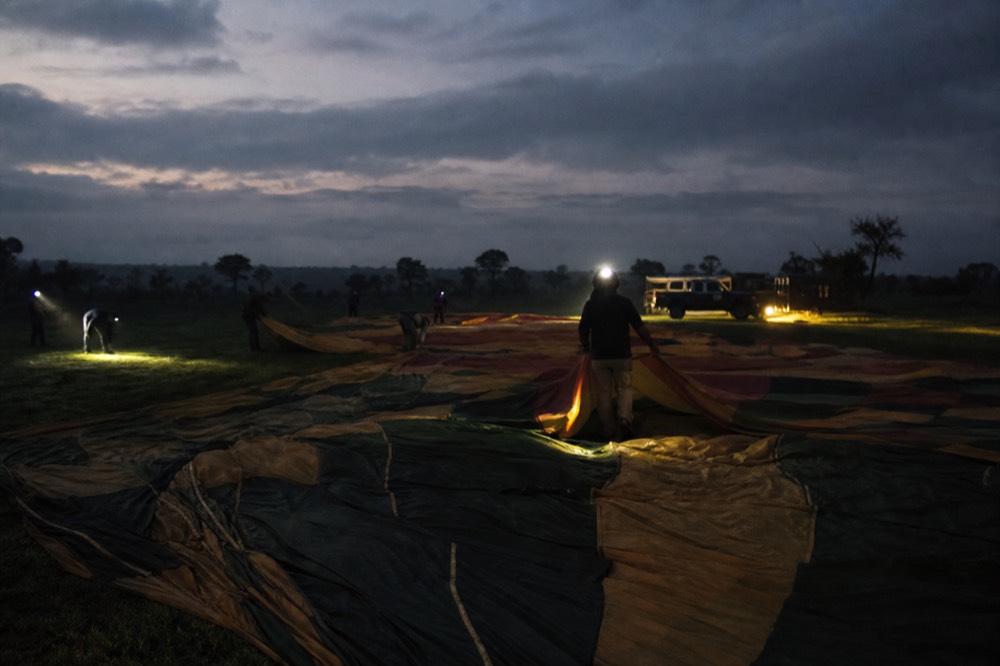
The basket itself does not demand special clothing. It is chest-high wicker with padded rails and separate standing compartments, and once you are in it you cannot really adjust anything below your waist, which is worth knowing before you pick your trousers. There is no seat, no aisle, no bag storage past a small space at your feet, and no toilet, so what you wear is what you live in for the next hour.
How cold is a Serengeti dawn, really?
Colder than almost anyone expects on the equator. The Serengeti sits high, roughly 1,500 metres above sea level across the central plains, and dry-season nights from June to October strip the heat out fast. Pickup is 4:30 to 6:00 am depending on how far your camp sits from the launch site, and that pre-dawn open-vehicle drive is the coldest part of your whole safari.
People underdress for this constantly. The trip brochure says Tanzania and the brain says hot, then the vehicle moves at 40 km/h through still air an hour before sunrise and everyone goes silent. The drive can run 30 to 60 minutes on the long pickups, which is enough exposure to matter.
| Time | Where you are | What it feels like | What you want on |
|---|---|---|---|
| 4:30-6:00 am | camp pickup, open vehicle | coldest point of the day, wind chill on top | all three layers, hat off or held |
| 5:30-6:20 am | launch site, standing on grass | cold and damp underfoot, dew soaks canvas shoes | all three layers, closed shoes |
| Liftoff to about 20 min | basket, sun still low | cool air, burner heat above you in pulses | shell on, mid-layer under |
| Last 30 min airborne | basket, sun up | warming quickly, glare off the plains | shell off, sunglasses on |
| Landing to breakfast | open grass, full sun | hot, exposed, no shade until the acacia | base layer, hat on, sunscreen |
The burner complicates it. When the pilot fires, you get a wave of radiant heat across the top of your head and shoulders that feels startlingly strong, and then it stops and the cold air comes back. This is not enough to keep you warm and it is definitely enough to make a thick wool hat uncomfortable. The hour-by-hour breakdown of the morning walks the same timeline in more detail.
The three-layer system that survives one morning
Base layer: long-sleeve merino or synthetic, not cotton, because cotton holds dew and sweat. Mid-layer: fleece or light down that compresses into a daypack. Outer: a thin wind shell, ideally with a zip you can work one-handed while holding a camera. That stack takes you from 12 degrees at pickup to 30 in the sun without changing clothes.
The point of layers on a balloon morning is that you cannot go back to the room. Whatever you shed you carry, so each layer needs to compress to nothing. A puffy jacket that folds into its own pocket beats a bulky sweatshirt every time, and a shell that packs into a fist beats a rain jacket with a wired hood.
| Layer | What works | What fails | Why |
|---|---|---|---|
| Base | long-sleeve merino or synthetic tee | cotton t-shirt | cotton holds dew and stays cold |
| Mid | fleece, or light down that stuffs into its pocket | heavy hoodie | you carry it all morning after sunrise |
| Outer | thin wind shell, full zip | poncho, cape, anything loose | loose fabric flaps and catches in the basket |
| Legs | lightweight trousers, soft waistband | shorts, stiff denim, skirts | cold at 5am, and you kneel on landing |
| Feet | closed flat walking shoes, low ankle | sandals, heels, canvas slip-ons | dew soaks canvas, open toes meet thorns |
| Hands | thin liner gloves in dry season | nothing, or thick ski gloves | fingers go numb on camera controls |
Two things people forget. Thin gloves are transformative between June and September, because your hands are the only exposed part of you and they are the part you need working. And a soft waistband matters more than it sounds: you are standing for an hour in a fixed spot, and a rigid belt buckle pressing into the basket rail gets old.
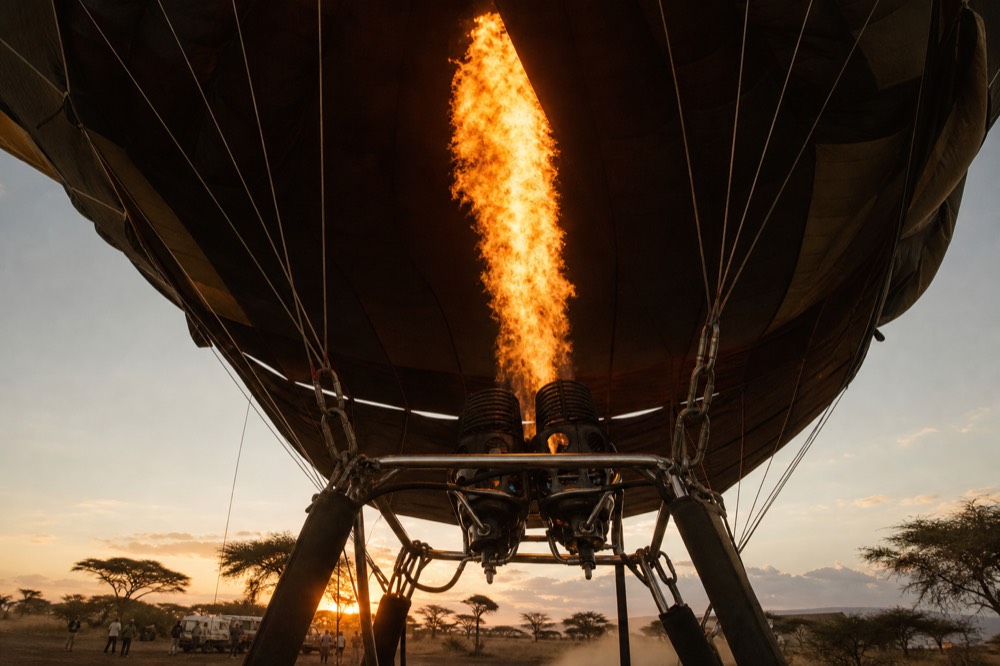
Skip the scarf unless it tucks fully inside a jacket. Anything trailing near a basket rail or a burner frame is a nuisance for you and a distraction for the crew, and on a windy morning it will simply leave.
Why do you need closed shoes for the landing?
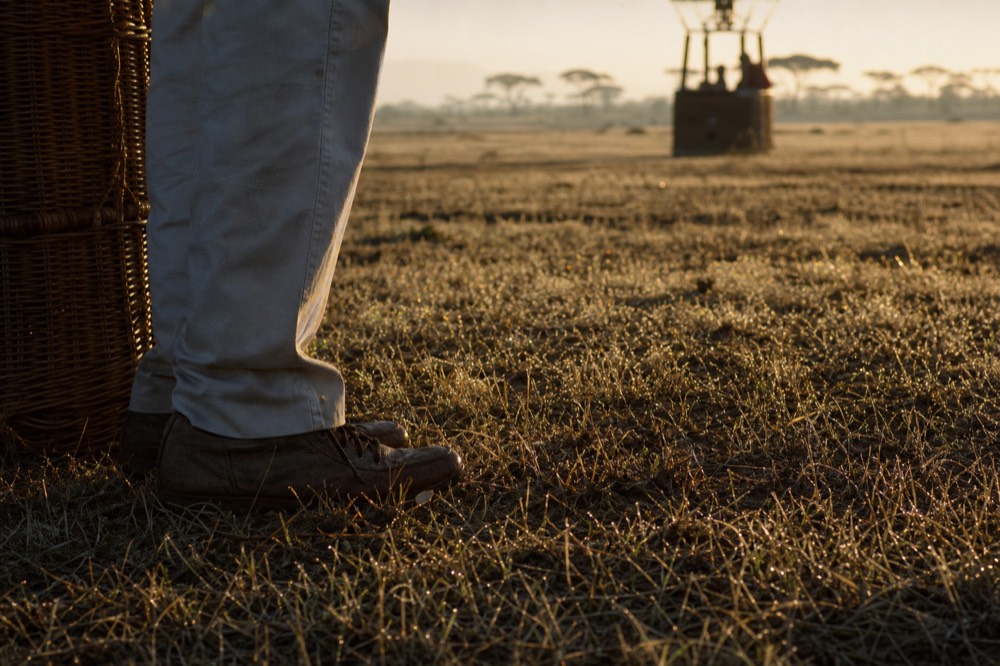
Because a balloon does not always land upright. Depending on wind at ground level the basket may touch down, tip onto its side and drag several metres through the grass before it stops. Passengers brace in the landing position the pilot briefs, knees bent, back to the direction of travel. Open toes, sandal straps and smooth soles are all wrong for that.
The landing is the part of a balloon flight that surprises first-timers, and it is entirely normal. Pilots brief the position before descent, everyone crouches, the basket comes in, and sometimes it simply sits down on its base while other times it lies over and skids. There is nothing dramatic about the second version except that you want proper shoes on your feet and both hands free.
| Footwear | Verdict | Why |
|---|---|---|
| Trail or walking shoes, low ankle | best choice | grip, closed toe, comfortable standing for an hour |
| Trainers or sneakers | fine | closed and flat, though mesh soaks in dew |
| Hiking boots | fine, slightly heavy | perfectly safe, more than you need |
| Canvas slip-ons | poor | wet through within a minute on the launch field |
| Sandals or flip-flops | no | open toes on thorn grass and a dragging basket |
| Heels or smart shoes | no | you cannot brace, and the ground is uneven |
What the operators publish as hard conditions covers age, weight, pregnancy and health rather than clothing. Serengeti Balloon Safaris sets a minimum age of six, Miracle Experience sets seven, the linked SBS Viator listing requires age seven, and Miracle’s Viator listing excludes passengers above 120 kg, and neither carries pregnant passengers. Those differing minimums matter if you are dressing a child for the same morning, and the age and weight rules for kids set them out in full. Nyssa’s listing explicitly excludes high heels and bare feet.
Why can't you wear white on a hot air balloon?
You can. No regulation, no operator condition and no aviation rule bans any colour from a balloon basket. The advice exists because of what actually happens to white clothing that morning: launch-field dust, dew and grass stains, soot smudges from the equipment, and a sparkling-wine toast poured in the open with no napkin in sight.
This is one of the most searched balloon questions and it has a boring answer. White is a laundry problem, not a safety problem. The launch field is dust and wet grass in the dark, ground crew hand equipment past you, and after landing you stand around in the grass with a glass while the crew packs the envelope. Something will end up on you.
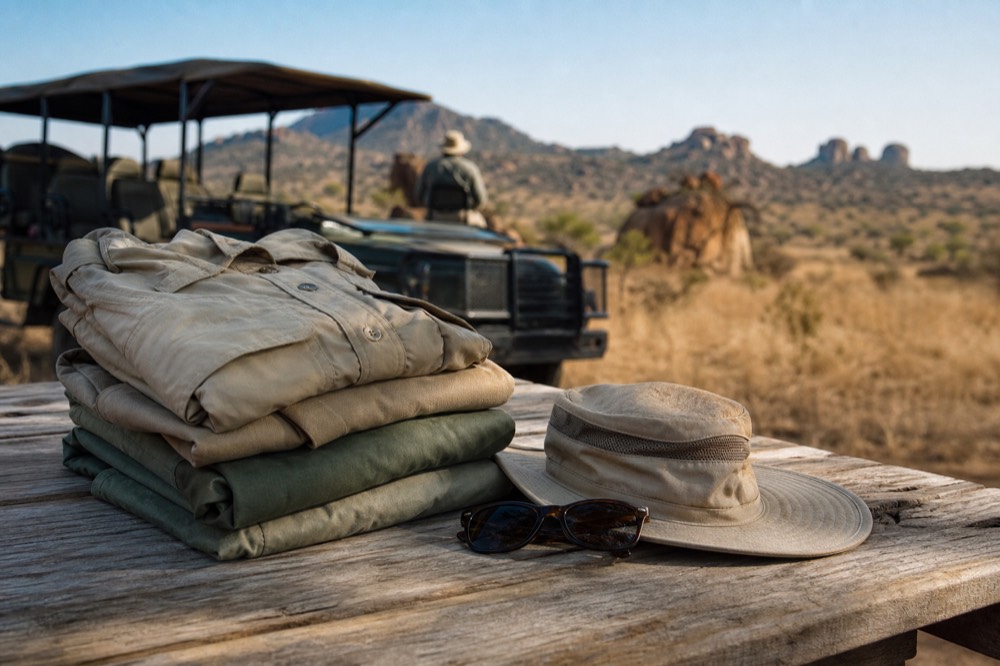
There is a second, softer reason worth knowing. Bright white reflects hard in low-angle sun and shows up in everyone else's photographs from inside the basket, which is a small thing until you are the pale smudge in the corner of thirty strangers' migration shots. If you love a white linen shirt, bring it for the lodge and wear something forgiving for the flight.
The one genuinely useful clothing rule for a balloon has nothing to do with colour: nothing loose, nothing dangling, nothing you would be upset to lose over the side. Hats, sunglasses and light scarves go over a basket rail easily and are gone.
Should you wear a hat under the burner?
Bring one, but expect to hold it for most of the flight. The burner sits directly above your head and radiates real heat in pulses, which makes a thick or wide-brimmed hat uncomfortable and occasionally hot. A soft cap that folds into a pocket is the right answer: off during the flight, on the moment you land into full sun.
Sun exposure on this morning is front-loaded and back-loaded at once. You are cold and shaded at the start, then within an hour you are in unobstructed equatorial sun at altitude with the light bouncing off the plains, and then you stand in an open field eating breakfast with the sun climbing. Sunscreen applied at the camp before pickup does more for you than any hat.
Sunglasses are worth more than people expect. Not for glamour: the low sun sits straight down the horizon line for the first twenty minutes and looking into it is exactly where the migration columns are. Polarised lenses cut the glare off the grass and the river.
| Item | In the basket | Note |
|---|---|---|
| Soft cap | in a pocket, on after landing | burner heat makes it uncomfortable in flight |
| Wide-brim safari hat | leave in the vehicle | catches wind, blows over the rail |
| Sunglasses | on, from about twenty minutes in | polarised cuts glare off the plains |
| Sunscreen | applied before pickup | no shade at breakfast |
| Lip balm with SPF | dry-season air at altitude is very dry | |
| Buff or neck gaiter | on for the drive, down in flight | doubles as dust protection on the transfer |
Are neutral colours a balloon rule or a safari convention?
A convention, with one real practical exception. Khaki, olive, tan and soft brown are the safari standard because they hide dust and do not stand out to wildlife on foot. Ballooning adds no colour rules of its own. The exception is black and dark blue, which attract tsetse flies in bush areas, and that one is worth taking seriously on the ground.
Tanzania's tourism authorities publish no official visitor dress code, so anyone telling you there is a national rule is inventing it. The neutral palette is convention and camouflage, useful mainly on walking safaris and in camps, and largely irrelevant at 300 metres.
The tsetse point is different because it is entomology rather than etiquette. Tsetse traps are built out of dark blue and black cloth precisely because those colours draw the flies in, and travel health guidance for Tanzania, including the CDC's country page, advises avoiding dark blue and black clothing in areas where tsetse are active. Your balloon hour is not the risk window; the vehicle transfer through woodland and your afternoon game drive are.
| Colour | What happens | Verdict for a balloon morning |
|---|---|---|
| Khaki, olive, tan | hides dust, standard across camps | best all-round choice |
| Grey, soft brown | same, slightly smarter for the lodge after | fine |
| White, cream | dust, grass, soot and sparkling wine find it | wear it later in the day |
| Black, dark navy | attracts tsetse flies in bush areas, absorbs heat | avoid in the bush, fine in town |
| Bright red, neon | no safety issue, dominates group photos | your call |
| Camouflage print | restricted or discouraged in several African countries | leave it at home |
What camera gear survives a basket landing?
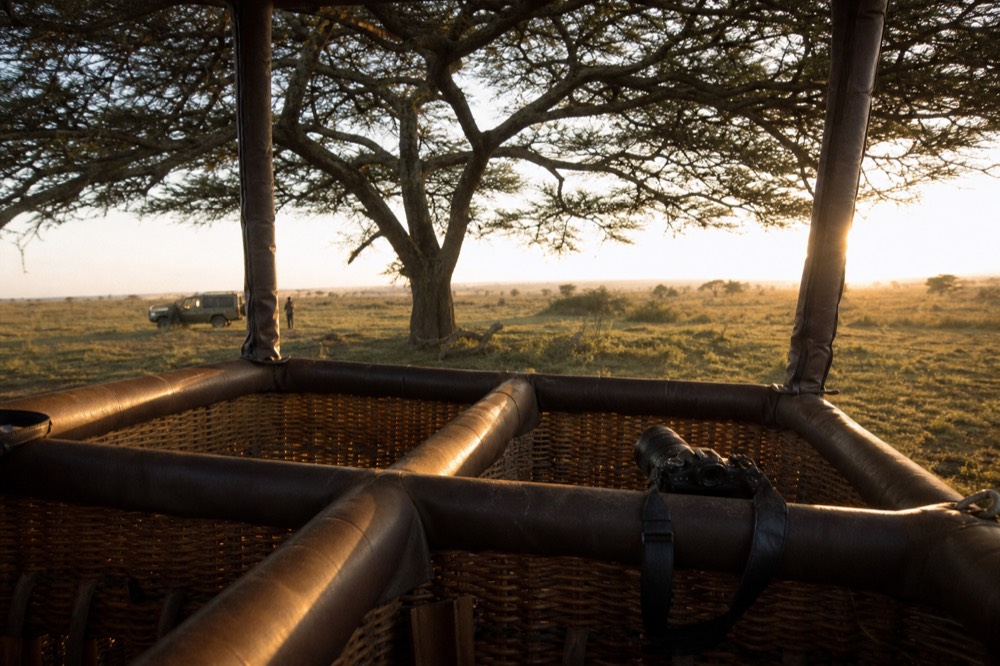
One camera on a short strap around your neck or wrist, one lens already fitted, and nothing else in your hands. Changing lenses mid-flight over open plains is how people lose them. Phones need a lanyard or a zipped pocket. Tripods and monopods have no place in a shared basket, and drones are not permitted in Tanzania's national parks without authorisation.
Bring the wide end rather than the long end. From a few hundred metres the subject is the pattern, the herd shapes, the river's braid, the shadows raking across the grass at sunrise. A long telephoto mostly gets you a soft grey animal and a lot of frustration; a 24-70 equivalent gets you the picture people actually keep.
| Gear | In the basket? | Note |
|---|---|---|
| Camera on a strap | yes | short strap, worn, never resting on the rail |
| Second lens | leave it | changing lenses over open plains loses lenses |
| Phone | yes, on a lanyard or in a zipped pocket | most-dropped item on any flight |
| Tripod or monopod | no | no room, and nothing to mount it to |
| Drone | no | national park airspace, authorisation required |
| Small daypack | at your feet, if the pilot allows | shed layers have to live somewhere |
| Binoculars | optional, compact only | the view is wide, not distant |
Batteries drain faster in cold air, so start full and keep a spare in an inside pocket where your body heat reaches it. Memory cards are cheap and a full card at sunrise over the migration is a genuinely painful mistake.
What should you pack by season?
The layer count changes with the calendar. Dry season, June to October, gives you the coldest dawns and the best flying conditions, so pack the most insulation. Short rains run November to December and long rains March to May, when dawns are milder but the transfer can be wet and the grass is soaking.
Launch sites move with the season too, which changes your drive time and therefore your exposure. Seronera in the central Serengeti flies year-round; Ndutu in the south runs 20 December to 31 March; the Western Corridor at Kirawira and Grumeti runs June to October; Kogatende in the north runs July to October. A long transfer to a seasonal site in the dark is the coldest scenario on the calendar, and the launch-site guide by season sets out which one your camp feeds into.
| Season | Months | Dawn conditions | Add to the standard three layers |
|---|---|---|---|
| Dry season | Jun-Oct | coldest dawns, clearest air, dusty | thin gloves, warmer mid-layer, buff for dust |
| Short rains | Nov-Dec | milder, occasional early cloud | packable waterproof shell |
| Long rains | Mar-May | mild but wet underfoot, green grass | waterproof shell, spare socks, shoes you can wash |
| Calving season | Jan-Mar, Ndutu | cold and often damp on the short-grass plains | warm mid-layer, waterproof shell, gloves |
| Crossing season | Jul-Oct, Kogatende | cold, dry, long dark transfers north | full stack, gloves, hat for the drive |
What should you leave in the vehicle?
Everything you would not want to hold for 70 minutes. Big camera bags, hard-shell cases, wide-brimmed hats, umbrellas, spare lenses, water bottles that do not seal, and any bag that cannot sit flat at your feet. The driver waits at the landing area with the vehicle, so nothing is lost, and the basket is far more comfortable when your hands are free.
Passports and money are a judgement call. Camps generally have a safe, and you are back before mid-morning, so most people leave documents behind rather than carry them through a landing that may put them on their side in the grass. Whatever you do bring should be in a zipped pocket rather than a hand.
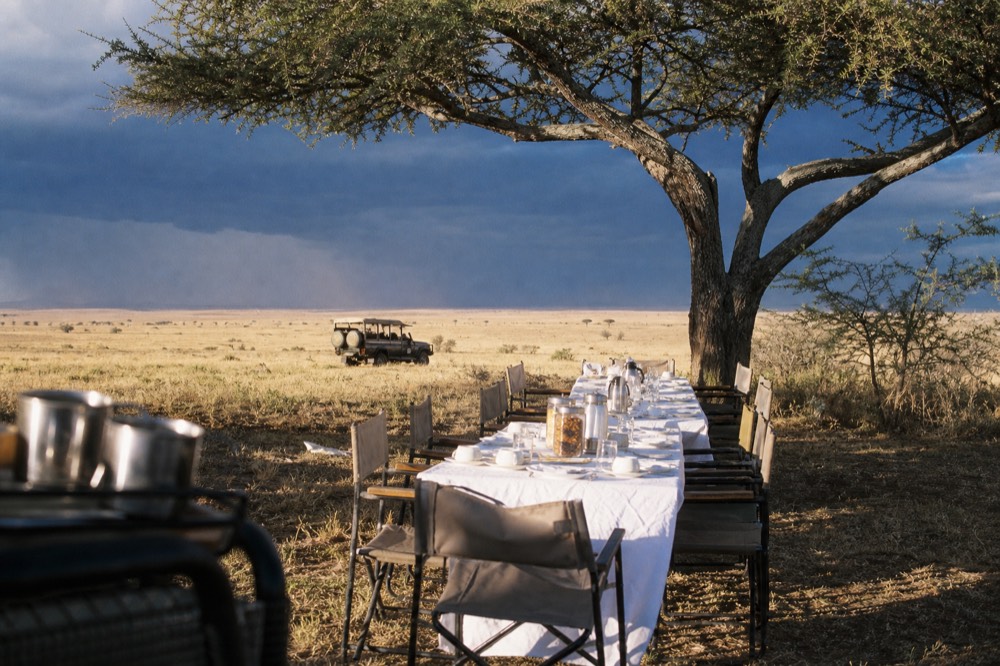
One last practical point that ties clothing to timing: pickup at 4:30 am means dressing in the dark, in a tent, without waking the person next to you. Lay the whole stack out the night before, shoes included. It sounds fussy and it is the difference between a calm start and standing in a cold vehicle realising your fleece is still on the bed. Questions about hemlines, jeans and colours off the launch field are covered in the note on shorts, jeans and dress in Tanzania, and the flight itself is compared across all four bookable flights if you are still choosing.
Common questions
What not to wear on a hot air balloon?
Sandals, heels, anything loose enough to blow over the rail, a wide-brimmed hat, a trailing scarf, and white you care about. Skip stiff denim for a 4:30 am start and skip black or dark navy in bush areas, where those colours draw tsetse flies. Nothing is banned by rule; these are comfort and laundry problems.
Why can't you wear white on a hot air balloon?
You can. No aviation regulation or operator condition restricts clothing colour. White simply loses: the launch field is dust and dew in the dark, equipment leaves soot marks, and the post-landing sparkling toast happens standing in the grass. Wear white at the lodge later and something forgiving in the basket.
Is it cold on a Serengeti hot air balloon ride?
The flight itself is cool rather than freezing, but the open-vehicle transfer beforehand is genuinely cold, especially June to October. The central plains sit around 1,500 metres and pickup is between 4:30 and 6:00 am. Three layers handle it, and you will be shedding them within an hour of sunrise.
Do I need closed shoes for a hot air balloon ride?
Yes, in practice. The basket can tip onto its side and drag through grass on landing, and passengers brace in a crouched position. Flat closed shoes with grip are the sensible choice; sandals and heels are not. Written operator conditions cover age, weight, pregnancy and health, so shoes are your own call.
Can I take a camera bag in the balloon basket?
A small daypack at your feet is usually fine if the pilot agrees, but there is no storage past that. One camera on a short strap and a phone on a lanyard covers almost everyone. Leave spare lenses, tripods and hard cases in the vehicle, which meets you at the landing spot.
What should a woman wear on a Serengeti balloon flight?
The same three-layer stack as anyone: long trousers over a long-sleeve base, a fleece or light down mid-layer, a wind shell and closed flat shoes. Skip skirts and shorts for the 5am start and the landing crouch. A soft cap that folds into a pocket beats a wide-brimmed safari hat in a basket.
Choose the experience that fits your trip
General starting point; dates, pickup and passenger acceptance still need confirmation.
Fit the flight into your safari day · alternatives & optional controls
- Nyssa: Seronera flight & luxury bush breakfast — Five-hour central Serengeti morning with camp pickup, breakfast and washrooms at launch and breakfast. Finishes at Serengeti Visitor’s Centre. Park entry and outside-park transfers excluded. No pregnancy, back problems, recent surgery or wheelchair use. Confirm child eligibility directly.
- Miracle Experience: balloon safari & bush breakfast — About five hours with camp transfers, tea/coffee, flight, breakfast and binoculars. Park entry and outside-park transfers excluded. Listing excludes under 120 cm and over 120 kg; child booking bands start at 5, but acceptance requires operator confirmation. No pregnancy or significant back/heart conditions.
Serengeti Balloon Safaris: dawn flight & breakfast
Have your travel dates? Check the itinerary and final price before fixing the rest of your trip.
About five hours including transfers, sunrise flight and bush breakfast. Park entry is extra. Ages 7+. Camp pickup and weight acceptance must be confirmed; no pregnancy, significant back or heart conditions.
Check dates & final price on Viator