Can a woman wear shorts in Tanzania?
Shorts are fine on safari and at lodges, less so in town and Stone Town. Jeans, black clothing and what to pack for a cold dawn balloon morning.
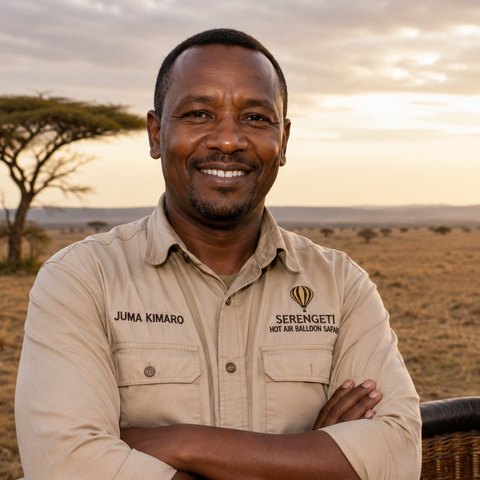 By Juma Kimaro, Serengeti balloon safari specialist since 2015
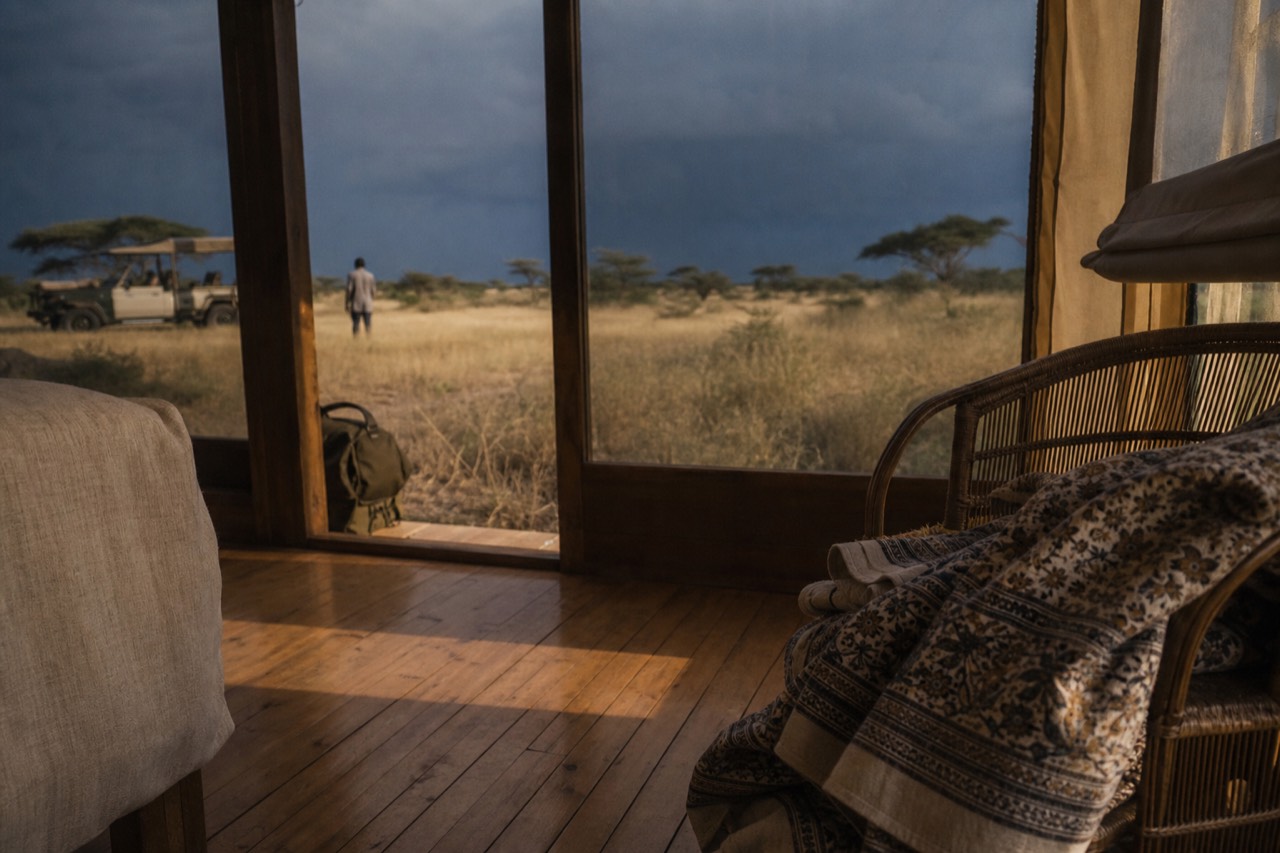
By ten in the morning in Arusha the light is hard and every shaded doorway has someone standing in it. Walk the market in shorts and nobody will stop you, but almost no local woman is wearing them, and that is the whole answer.
Yes. No law, dress code or religious rule stops a woman wearing shorts anywhere in Tanzania. On safari, in camps and lodges, and at beach resorts, shorts are completely normal. In towns, villages and above all in Zanzibar's Stone Town, knee-length or longer reads as respectful, and light trousers make the day easier.
Booking-rule update (17 September 2026): SBS’s direct FAQ says age six, but the linked Viator product requires seven. Miracle’s Viator product excludes under 120 cm and over 120 kg. Use the terms attached to the exact booking.
Clothing depends on the day you have planned: a Stone Town walk and a cold Serengeti launch need different outfits.
Booking choice: explore the dawn flight below, or choose the Stone Town walk in the trip options for your Zanzibar days. Explore the itinerary & inclusions
Where shorts work, and where they land wrong
Mainland safari areas and lodges: shorts are standard and nobody thinks about it. Towns, markets, villages and any government building: cover the knee. Stone Town and Zanzibar's villages: shoulders and knees covered away from the beach. Beach resorts: swimwear and shorts are fine on the property, less so walking into the nearest village.
This is convention, not regulation. Tanzania's tourism authorities publish no official visitor dress code, so anyone quoting a national rule is describing custom and calling it law. What exists is a strong social norm, more conservative in rural areas and along the coast.
| Setting | Shorts? | What works better |
|---|---|---|
| Game drives, safari camps, lodges | yes, completely normal | light trousers for early starts and evening insects |
| Arusha, Moshi, Dar es Salaam streets | acceptable, uncommon | knee-length or longer, or lightweight trousers |
| Villages, markets, local restaurants | best avoided | midi skirt or loose trousers |
| Zanzibar beach resorts | yes, on the property | a wrap for walking off the beach |
| Stone Town and Zanzibar villages | no | shoulders and knees covered, loose fabric |
| Mosques and churches | no | long skirt or trousers, scarf for the head in mosques |
The practical fix costs nothing. Buy a kanga, the printed cotton wrap sold everywhere for a couple of dollars, and keep it in your daypack. It becomes a skirt over shorts in thirty seconds, a shoulder cover, a picnic blanket and a dust screen on a windy drive.
What changes in Zanzibar and Stone Town?
Zanzibar is overwhelmingly Muslim and its dress expectations are noticeably stronger than the mainland's. On resort property, anything goes. Off it, and particularly in Stone Town's alleys and the fishing villages, covering shoulders and knees is the norm for women and men both. Nobody will confront you for getting it wrong; you will simply be very visible.
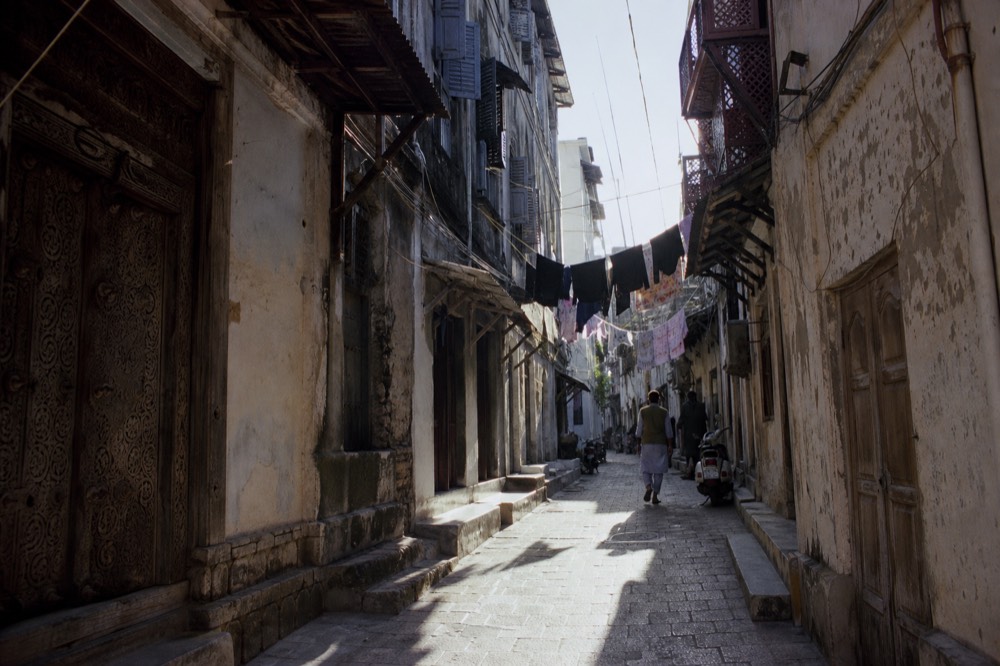
Dress here is a social question, not a security one. The UK's travel advice for Tanzania warns against all but essential travel only within 20 kilometres of the Mozambique border in the far south, nowhere near the Serengeti, Arusha or Zanzibar, and the current picture for American travelers is set out separately.
Can you wear jeans in Tanzania?
Yes, and plenty of people do. Jeans are normal in Tanzanian towns and cities, entirely acceptable in restaurants and lodges, and read as smarter than shorts. The catch is heat and water: denim is hot at midday, slow to dry after a rain-season downpour, and stiff for the crouched landing position at the end of a balloon flight.
For a game drive, jeans are fine but not the best tool. Lightweight trousers do the same social work at half the weight, wash in a sink and dry overnight. For town days and evenings, jeans are a good call, and a dark pair covers dinner at any lodge in the country.
One caveat for balloon mornings: pickup is between 4:30 and 6:00 am, you stand for an hour in a fixed spot, and the basket may tip and drag on landing. Stiff denim is the wrong outfit for that hour. Soft trousers win.
Can I wear black in Tanzania?
Yes, with one real practical exception. Nothing cultural or legal restricts black clothing. But black and dark blue attract tsetse flies, which is why tsetse traps are built from exactly those colours, and travel health guidance for Tanzania advises avoiding them in areas where the flies are active. Black also absorbs heat, which matters at midday on the plains.
Tsetse are patchy rather than everywhere. Woodland belts, riverine bush and corridors between parks are where you notice them; open short-grass plains generally are not. The CDC's Tanzania page covers the insect precautions, and any decent guide will warn you before a bad stretch.
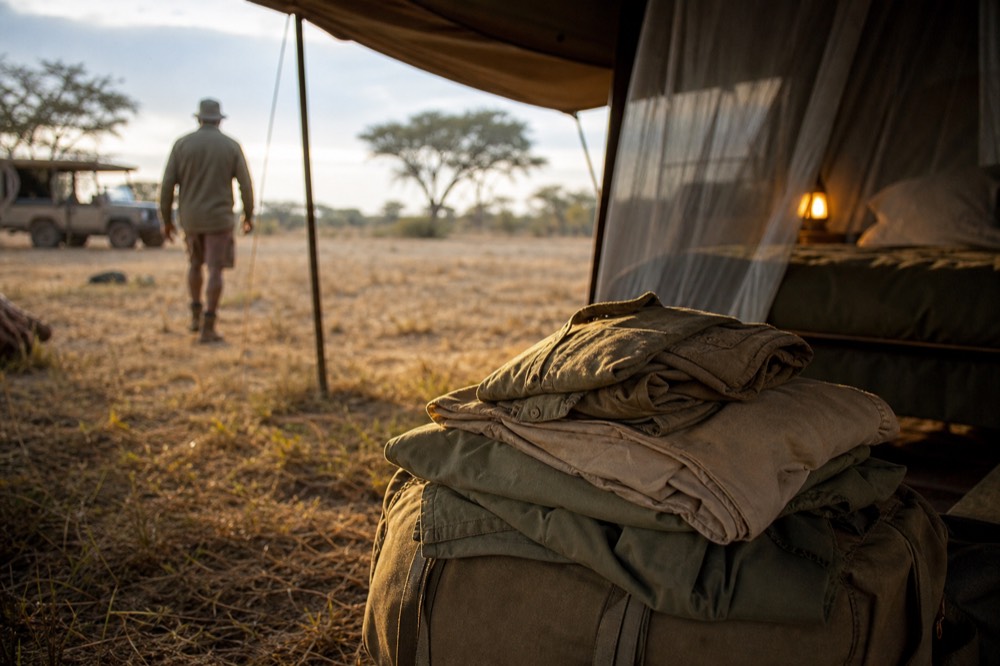
Hence the safari palette. Khaki, olive, tan and soft grey hide dust, do not draw tsetse, and do not stand out on foot. In town, in a lodge or on the beach, wear whatever you like, black included. Camouflage print is the one pattern worth leaving at home, since several African countries restrict or discourage civilians wearing it.
What do women actually pack for a balloon morning?
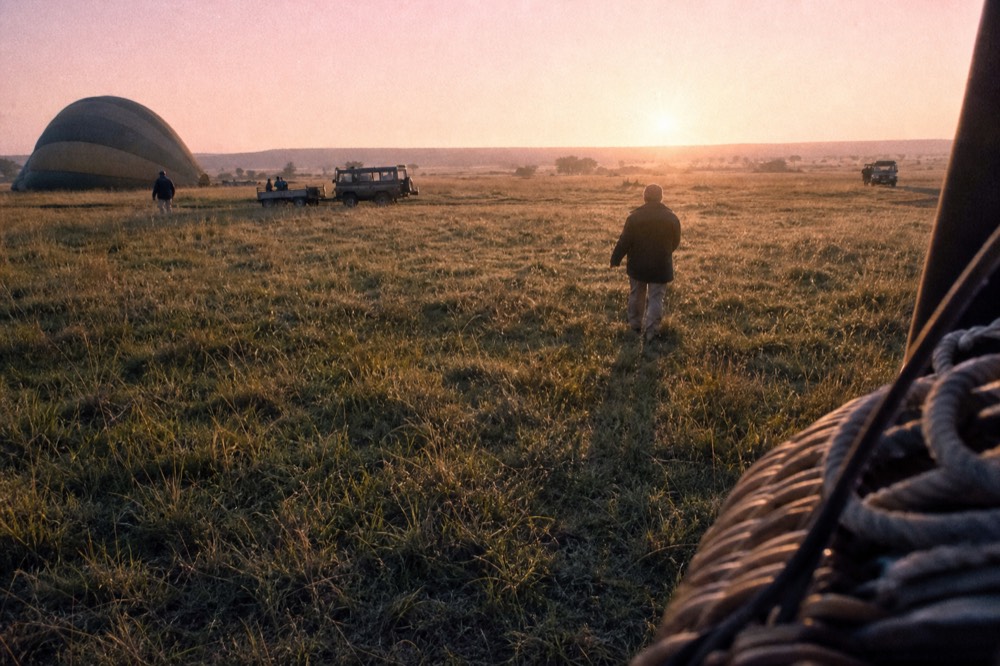
Long trousers, a long-sleeve base layer, a fleece or light down mid-layer, a wind shell and closed flat shoes. Not shorts, not skirts, not sandals. Dry-season dawns on the plains are genuinely cold, the transfer vehicle is open, and the landing can put the basket on its side and drag it through grass.
Every part of that list has a reason. The cold is real: the central Serengeti sits around 1,500 metres and pickup runs before first light. Closed shoes are for the landing crouch and a dew-soaked field studded with thorn grass. The layers come off within an hour of sunrise, when you finish the morning eating a cooked breakfast in full sun.
| Item | Balloon morning | Rest of the safari day | Town or Stone Town |
|---|---|---|---|
| Shorts | no | yes, on drives and at camp | knee-length at most |
| Light trousers | yes | yes | yes |
| Long skirt or kanga wrap | no | fine at camp | ideal |
| Closed flat shoes | required in practice | yes | yes |
| Fleece and wind shell | yes | evenings only | rarely |
| Wide-brim hat | leave in the vehicle | yes | yes |
The conditions balloon operators actually publish cover age, weight, pregnancy and health, not clothing. Serengeti Balloon Safaris sets a minimum age of six, plans on an 80 kg average passenger weight with a surcharge above 120 kg, and does not carry pregnant passengers. Nothing there mentions hemlines. The layer-by-layer breakdown sits in the dawn-flight packing guide. Related reading: the boutique flights.
Common questions
Can a woman wear shorts in Tanzania?
Yes. No law or dress code prohibits it. Shorts are standard on safari, in camps and at beach resorts. In towns, villages and Zanzibar's Stone Town, knee-length or longer is the respectful norm, and a cheap kanga wrap in your daypack solves the problem instantly whenever you leave the resort or the park.
Can you wear jeans in Tanzania?
Yes, jeans are common and completely acceptable in towns, restaurants and lodges. They are hot at midday and slow to dry in the rains, so lightweight trousers work better on game drives. For a dawn balloon flight, soft trousers beat stiff denim, since you stand for an hour and crouch for the landing.
Can I wear black in Tanzania?
Yes, with one practical caveat. Black and dark blue attract tsetse flies, which is why tsetse traps use those colours, and health guidance for Tanzania advises avoiding them in bush areas where the flies are active. Black also absorbs heat. In towns, lodges and on the coast, wear it freely.
Do I need to cover my hair in Tanzania?
No. Non-Muslim visitors are not expected to cover their hair anywhere in Tanzania, Zanzibar included. A light scarf is worth carrying anyway: it covers your head for a mosque visit, your shoulders in Stone Town, and your face on a dusty transfer between camps.
Choose the experience that fits your trip
General starting point; dates, pickup and passenger acceptance still need confirmation.
Match your safari or Stone Town day · alternatives & optional controls
- Stone Town: guided streets & markets walk — Private guided walking options of 3–5 hours, including English. Historic streets, Darajani market and former slave-market area. Meeting/pickup and entry inclusions depend on option. Wear comfortable shoes and modest clothing. This is on Zanzibar, not a Serengeti transfer.
- Nyssa: Seronera flight & luxury bush breakfast — Five-hour central Serengeti morning with camp pickup, breakfast and washrooms at launch and breakfast. Finishes at Serengeti Visitor’s Centre. Park entry and outside-park transfers excluded. No pregnancy, back problems, recent surgery or wheelchair use. Confirm child eligibility directly.
Serengeti Balloon Safaris: dawn flight & breakfast
Have your travel dates? Check the itinerary and final price before fixing the rest of your trip.
About five hours including transfers, sunrise flight and bush breakfast. Park entry is extra. Ages 7+. Camp pickup and weight acceptance must be confirmed; no pregnancy, significant back or heart conditions.
Check dates & final price on Viator