Balloon Safari: Serengeti or Masai Mara?
From the basket the two flights look almost identical, and the difference is everything the ground underneath charges you.
 By Juma Kimaro, Serengeti balloon safari specialist since 2015
Short answer
Neither park wins outright. A flight over the Serengeti starts from $599, with one champagne variant at $643, and Tanzanian park entry sits around $70 to $83 per adult per 24 hours on top of that. The Kenyan equivalent runs roughly $450 to $585, but Masai Mara entry costs $100 a day from January to June and $200 from July to December. Book the balloon on the side your safari already sleeps.
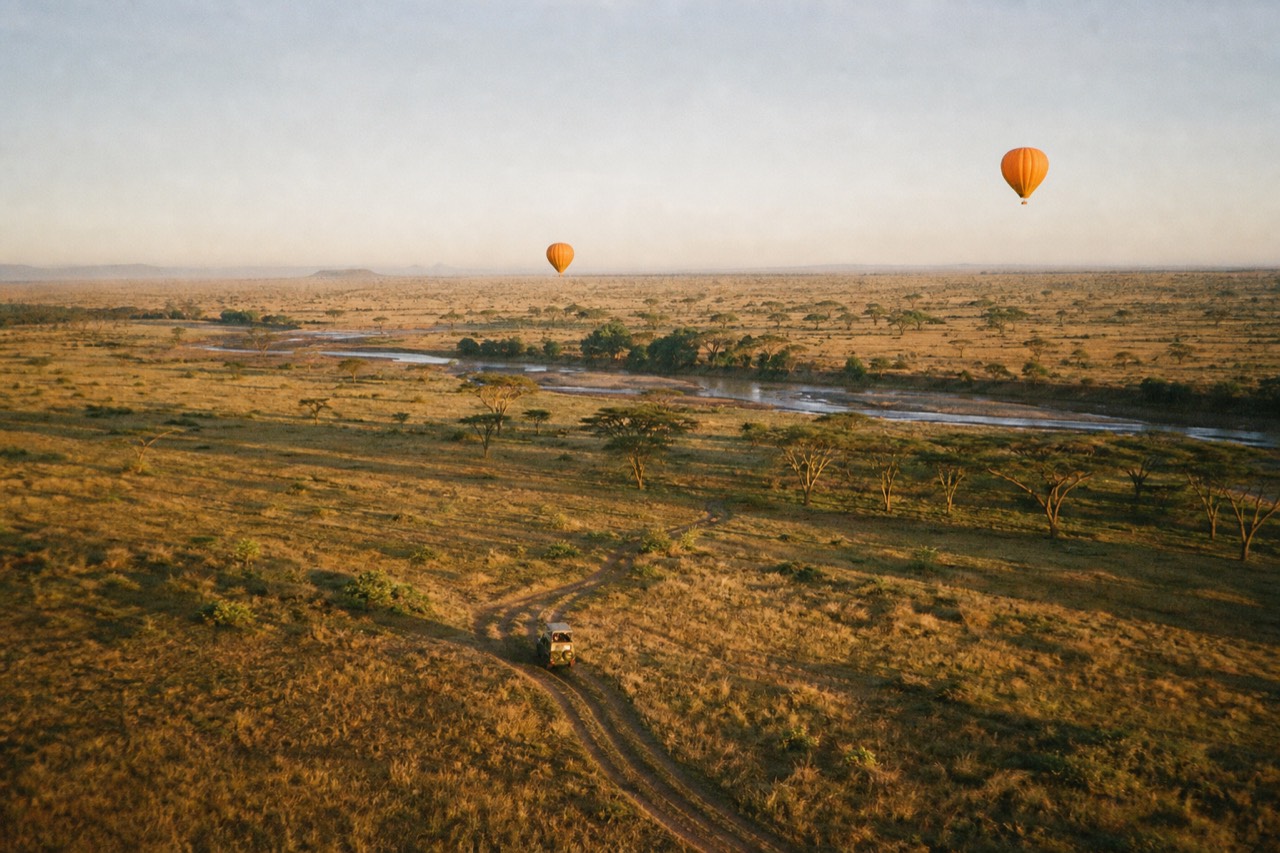
The burner falls quiet about ten minutes after liftoff, and then the plains do all the talking. Somewhere under the basket a line of wildebeest is walking the same route it walked last year, and the border it will cross on the way north is completely invisible from up there. On the ground that border decides your flight price, your park fee, and roughly half your itinerary.
Travelers ask this question as if one balloon is better than the other. It isn't. The baskets are similar, the pilots are commercially licensed on both sides, the breakfast comes out of a cool box under an acacia either way. What actually differs is money, scale and calendar.
Choose the country first, then compare the balloon morning and the park costs attached to it.
Booking choice: inspect a Serengeti departure and compare the separate Kenyan Mara option at the end. Explore the itinerary & inclusions
What does a balloon flight cost on each side of the border?
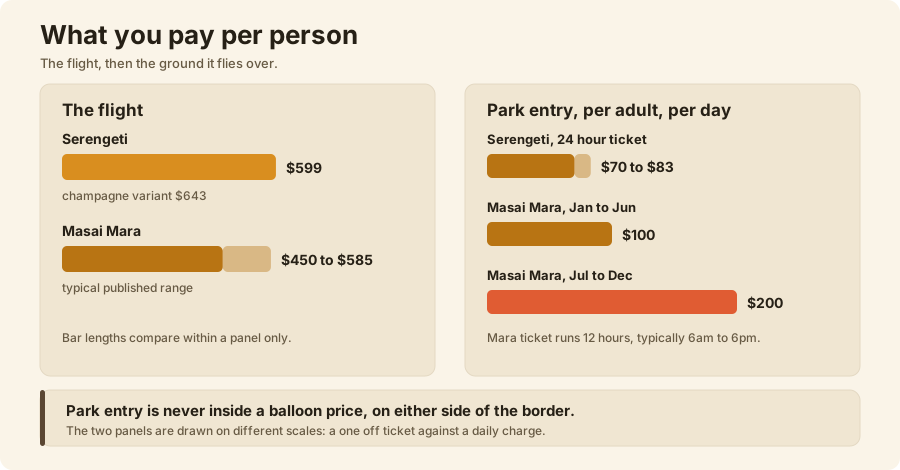
A shared dawn flight over the Serengeti starts from $599 per person, with one champagne variant at $643. The Kenyan Masai Mara equivalent runs roughly $450 to $585. Park entry is separate on both sides, paid with your safari rather than with the balloon, and that gap swings the total.
The Tanzanian rate has been stable. The $599 figure has held since 2025 and matches what the operators publish on their own sites, so there is no platform markup hiding in it. Kenya's number is a range rather than a rate, because the two long-running Mara operations, Governors' Balloon Safaris and Balloon Safaris Ltd, price by season and by package.
| Flight | Side of the border | From-price | Airborne |
|---|---|---|---|
| Serengeti Balloon Safari with Bush Breakfast | Tanzania | $599 | 50-70 min |
| Miracle Experience Balloon Safari & Bush Breakfast | Tanzania | $599 | 50-70 min |
| Balloon Ride with Luxury Bush Breakfast | Tanzania | $599 | 50-70 min |
| Balloon Flight with Champagne Breakfast | Tanzania | $643 | 50-70 min |
| Typical shared Masai Mara flight | Kenya | roughly $450-585 | about 60 min |
None of those prices include park entry. That is the single most misread line in every balloon quote you will read this week, on either side. The flight fee covers the balloon, the transfer, the breakfast and the toast; the conservation fee for standing on the ground underneath belongs to your safari budget.
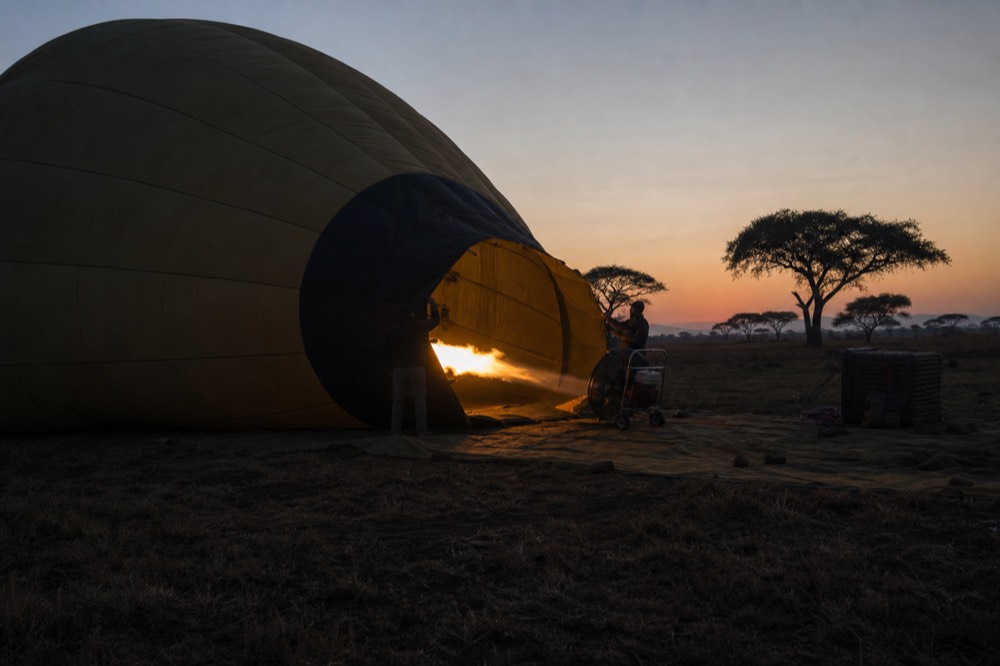
Private charters exist on both sides and cost multiples of the shared rate, well past $2,000 per person in the Serengeti. Almost nobody needs one. A shared basket holds its compartments separately, everyone gets an outside edge, and the pilot flies the same line either way.
Which park fees sit behind the flight price?
Serengeti entry runs roughly $70 to $83 per non-resident adult per 24 hours, depending on how VAT is quoted, per the latest published tariff. Masai Mara entry is $100 per adult per day from January to June and $200 per day from July to December, on a 12-hour ticket. Over a three-day stay that difference dwarfs the flight-price gap.
This is where the cheaper Kenyan balloon stops being cheaper. Narok County, which runs the Mara, moved deliberately to a low-volume, high-value model, and the seasonal doubling in the second half of the year lands exactly when the migration does. Kenyan child rates are $50 for ages nine to seventeen, with under-eights free. The published TANAPA tariff sets Tanzanian rates separately, and the Mara's own fee page carries the Kenyan schedule.
| Fee line | Serengeti, Tanzania | Masai Mara, Kenya |
|---|---|---|
| Non-resident adult | roughly $70-83 per 24 hours | $100/day Jan-Jun, $200/day Jul-Dec |
| Children | set separately in the published tariff | $50 for ages 9-17, free under 8 |
| Ticket window | 24 hours | 12 hours, typically 6am to 6pm |
| Who pays it | your safari operator, inside the itinerary | your safari operator, inside the itinerary |
| Inside the balloon price? | No | No |
The 24-hour versus 12-hour ticket is the detail nobody prices in. A Serengeti ticket carries you through an afternoon drive, a night in the park and the next morning's balloon; a Mara ticket typically expires at dusk, so a dawn balloon the following day starts a fresh day's fee. Balloon mornings are exactly the kind of trip segment where that quietly costs you another hundred dollars.
There is a third Tanzanian line worth knowing if your itinerary includes the crater. The Ngorongoro Conservation Area sits under a different authority, charges around $70.80 per adult per day, and adds a vehicle fee near $295 for the crater descent, capped at six hours on the floor. Several balloon pickups run from lodges on that side, so the two budgets touch.
How big is the country you actually fly over?
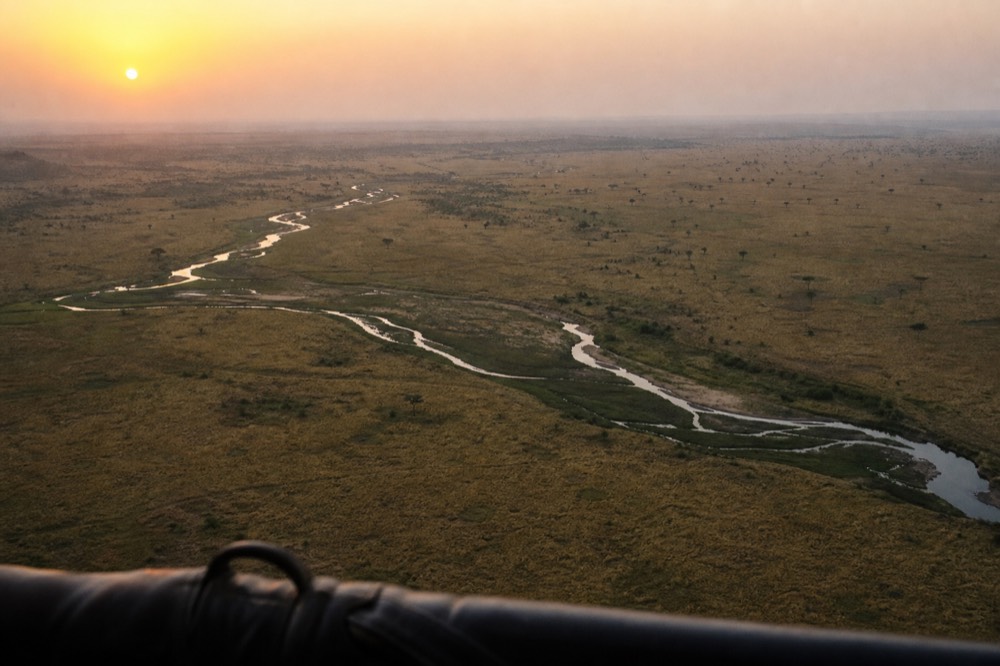
Serengeti National Park covers 14,763 square kilometres. The Masai Mara National Reserve covers about 1,510. That is close to a ten-to-one difference, and from a basket at a few hundred metres it changes what fills the horizon: unbroken plain in Tanzania, a tighter and more concentrated landscape in Kenya.
Scale cuts both ways. The Mara's compactness is a genuine advantage on a short trip, because the wildlife density per square kilometre is high and you are never far from anything. The Serengeti asks for time, and rewards it with a horizon that keeps going after you expect it to stop. Under the UNESCO listing the plains run to roughly 1.5 million hectares, inscribed in 1981 for the migration and the intactness of the ecosystem, and the two parks are two halves of that same unbroken system.
| Serengeti National Park | Masai Mara National Reserve | |
|---|---|---|
| Area | 14,763 km² | about 1,510 km² |
| Relative scale | close to ten times the Mara | roughly a tenth of the Serengeti |
| Balloon launch areas | four, seasonal: Seronera, Ndutu, Western Corridor, Kogatende | reserve and neighbouring conservancy areas |
| Flying calendar | somewhere in the park, year-round | year-round, weather permitting |
| Ecosystem role | the southern bulk of the migration circuit | the northern grazing ground |
Pickup radius follows from that scale. The most-reviewed Serengeti operation collects from camps and lodges within about two hours or 40 kilometres of the morning's launch site, which sounds generous until you realise how far apart Serengeti camps sit. Where you sleep decides which launch site is even reachable before dawn, so check the pickup area on the listing before you fall in love with a particular operator.
Which side flies year-round, and which one has a season?
The Serengeti always has a balloon in the air somewhere: Seronera launches year-round, Ndutu runs 20 December to 31 March, the Western Corridor runs June to October and Kogatende in the north runs July to October. Mara flights operate year-round too, weather permitting, but the reason most people fly there is compressed into July through October.
That is the practical asymmetry. In Tanzania the map moves with the herds and you follow the map; in Kenya the calendar is narrower and busier. If your holiday falls in February, the Mara is a fine safari but the migration is 300 kilometres south of it, calving on the short-grass plains around Ndutu, and there is a balloon flying over that exact spectacle. Full season-by-season detail sits in the month-by-month flying calendar and the launch-site map for each season, and the operators' own seasonal launch-site notes back it up.
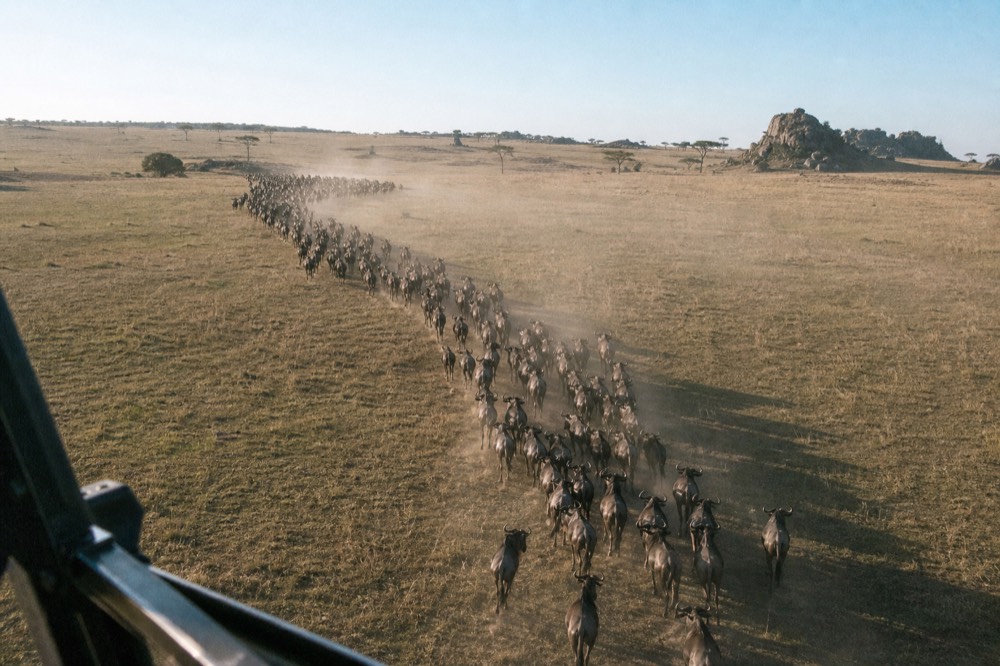
| Months | Where the herds sit | What the Mara holds | Better balloon side |
|---|---|---|---|
| Jan-Mar | Ndutu and the southern short-grass plains, calving | resident game, few migrants | Serengeti, from Ndutu |
| Apr-May | central Serengeti, long rains | resident game, quiet season | Serengeti, from Seronera |
| Jun | Western Corridor and Grumeti | herds building at the border | Serengeti, Kirawira |
| Jul-Oct | northern Serengeti, Mara River crossings | peak crossing season | either, but the fee gap is widest |
| Nov-Dec | herds tracking back south | thinning out | Serengeti, central or south |
Timing on the migration slides by four to eight weeks year to year. Nobody sells you a guaranteed crossing, and any operator who does is selling something they cannot deliver. What you can plan for is being in the right half of the ecosystem in the right month, which is a much easier target to hit than a river bank on a Tuesday.
What happens in crossing season, when both sides watch the same herds?
From July to October the same animals are visible from both countries, because the Mara River is the boundary zone rather than a wall. Northern Serengeti balloons launch from Kogatende on the Tanzanian bank; Mara balloons fly the Kenyan side. In 2026 the crossings were logged on 15, 20 and 21 August, and August is the most active crossing month in the long-term record.
This is the part people get wrong when they compare the two. They picture the crossings as a Kenyan event. The river runs through both territories, the herds move back and forth across it repeatedly rather than once, and a Kogatende launch puts you over the same water. What you are choosing between is not two spectacles, it is two viewpoints on one.
A balloon is also a strange tool for watching a crossing, and it pays to be honest about that. Flights launch at first light and are down inside 70 minutes; crossings happen when the herds decide, often mid-morning or later. What the basket gives you is the shape of the thing: the columns feeding toward the water from kilometres out, the dark braid of the river, the pattern that no ground vehicle can see. Live sighting reports run on the herd tracker if you want to watch the front edge move before you commit to dates.
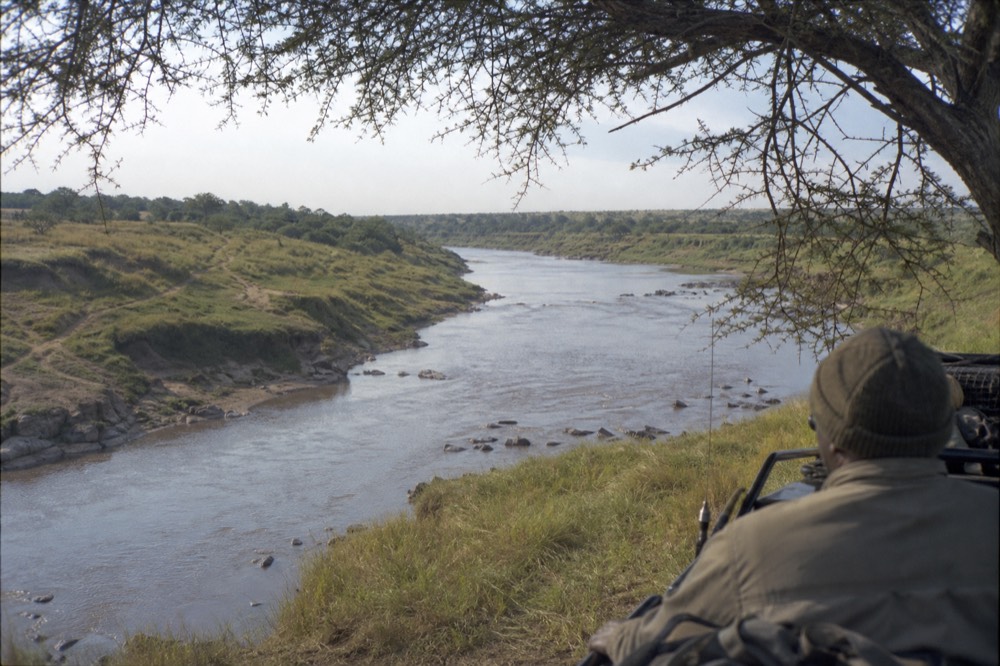
There is a fee twist here too. Crossing season is exactly when Kenya's entry fee doubles to $200 a day and Tanzania's holds flat. Two people spending four nights in each park on either side of the river pay the same conservation fee for the animals, and one bill is several hundred dollars heavier. The complete flight lineup on this site all launches on the Tanzanian side of that arithmetic. If watching the herds from the air is the whole point of the trip, the migration-from-the-air guide breaks the season down week by week.
How busy is each park now?
The Serengeti recorded about 491,398 visitors in 2025, up from roughly 430,000 in 2024. The Masai Mara recorded around 213,000, down sharply from about 343,000 the year before. The bigger park now takes more than twice the visitors and spreads them across ten times the ground, so the density story runs opposite to the headline numbers.
Kenya's fee rises did what they were designed to do. Fewer vehicles, higher yield per visitor, a quieter reserve. If your priority is few other cars in your photographs and you are willing to pay for it, that is a real and defensible product, and the Mara delivers it.
| Year | Serengeti visitors | Masai Mara visitors |
|---|---|---|
| 2023 | about 389,000 | about 420,000 |
| 2024 | about 430,000 | about 343,000 |
| 2025 | about 491,398 | about 213,000 |
From a balloon, crowding barely registers either way. You will see vehicles below you around the popular river bends in high season, small and slow and largely irrelevant to the view. Ballooning is one of the few safari activities that is genuinely unaffected by how many other people booked the same park, because you are the only basket in your patch of sky and there is no queue at altitude.
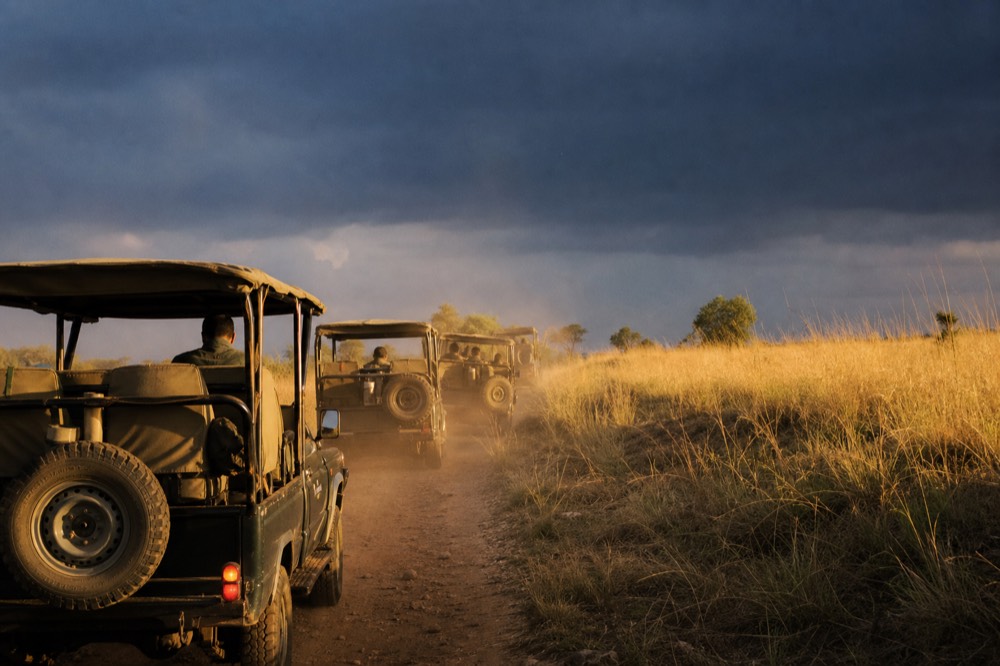
Where crowding does bite is the balloon booking itself. Dawn is the only flying window, baskets are finite, and high-season mornings in both countries go early. The newer central-Serengeti listings tend to have availability when the flagship operations are full, which is a practical reason to keep more than one option open.
Which itinerary suits which balloon?
Book the balloon that matches the safari you have already planned. Tanzania's northern circuit pairs the Serengeti with Ngorongoro and Tarangire; Kenya's classic route pairs the Mara with Amboseli or Samburu. Flying costs you one morning, not a border crossing, and rerouting a whole trip for a $50 to $150 price difference on the flight is a bad trade.
Almost every version of this question resolves once you write down the actual trip. The tables above compare products; your booking is decided by geography and by how many mornings you have. Here is how the common shapes fall out.
| Your trip | Fly from | Why |
|---|---|---|
| Tanzania northern circuit | Serengeti | you are already inside the park and paying its entry fee |
| Kenya-only, July to October | Masai Mara | the cheaper flight, and you are on the right bank at the right time |
| Both countries, one balloon budget | Serengeti | 24-hour ticket, flat fee, more launch-site choice |
| Calving season, January to March | Serengeti, Ndutu | the herds are nowhere near Kenya |
| One free morning on a short trip | whichever park you sleep in | pickup radius decides this, not price |
| Family with a child near the age minimum | Serengeti | minimums differ by operator, so you have more listings to check |

One rule that saves people money and disappointment: do not build a Kenya leg around a balloon flight, and do not build a Tanzania leg around one either. Add the flight to the country you are visiting anyway. If both are on the itinerary, fly the Serengeti side, where the fee is flat and the launch-site options are broader.
So which one should you book?
Book the one your safari already visits. The baskets, the pilots, the dawn window and the bush breakfast are close enough that the differences between countries matter more than the differences between operators. If your trip touches both, fly in Tanzania, where park entry runs flat all year and the balloon map covers four seasonal launch areas instead of one.
Look at what you are actually buying and the case gets simpler still. Both sides sell a first-light launch, a shared basket, roughly an hour airborne and a cooked breakfast in the grass afterwards. The Tanzanian listings publish a clearer picture of what is inside the price and what sits outside it.
| What you get | Serengeti flights on this site | Typical Masai Mara flight |
|---|---|---|
| Camp or lodge transfer | included, within about 2 h / 40 km of launch | not consistently stated in operator pricing |
| Airborne time | 50-70 minutes | about 60 minutes, up to 90 in some descriptions |
| Bush breakfast | cooked, with a sparkling toast | included |
| Flight certificate | included on all four | varies by operator |
| Park entry fee | not included, paid with your safari | not included, paid with your safari |
| Free cancellation | up to 24 hours before, all four listings | varies by operator |
If you want the strongest review record, the flagship Serengeti operation holds 4.9 across 3,504 reviews, which is the largest verified sample of any balloon product in either country. Both start from $599 with park entry paid separately, and both cancel free up to 24 hours out, but cancellation deadlines and refund terms must be checked for the exact option.
The question underneath this one, whether the Mara beats the Serengeti as a whole safari destination rather than as a balloon launch pad, is a different argument with a different answer. That version is worked through in the whole-park comparison.
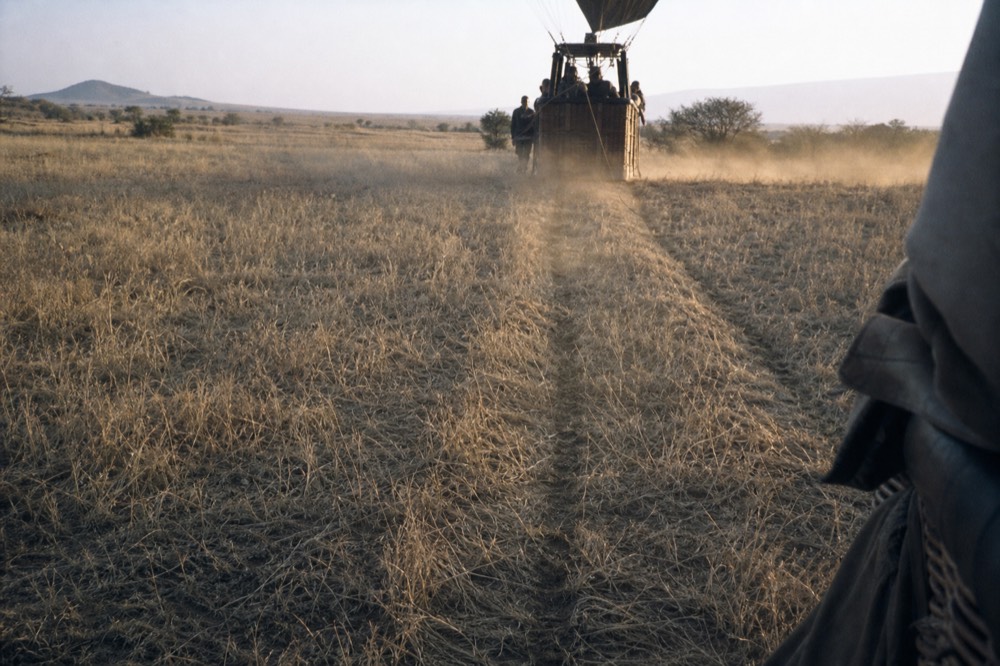
Common questions
Is a hot air balloon better in Masai Mara or Serengeti?
Neither is better in the air. The Serengeti gives you four seasonal launch areas, a flat park fee near $70 to $83 per adult per 24 hours, and flights from $599 with entry paid separately. The Mara gives you a cheaper flight at roughly $450 to $585 and a tighter, denser landscape. Fly wherever your safari already sleeps.
Which is better Masai Mara or Serengeti balloon ride?
On product terms the Serengeti flights are better documented: four bookable listings, ratings of 4.9 and 5.0 across thousands of reviews, free cancellation to 24 hours, and prices that match the operators' own published rates. The Kenyan flights cost less up front but sit under a park fee that doubles to $200 a day from July to December.
Is a hot air balloon in Kenya worth it?
Yes, if you are already in the Masai Mara. Roughly $450 to $585 buys about an hour airborne and a bush breakfast, on top of park entry paid with your safari. It is not worth building a Kenya leg around, and it is not worth skipping a Serengeti flight for, because the saving disappears into two days of Mara entry fees in high season.
Can you see the Mara River crossings from a balloon?
Sometimes, and never on demand. Balloons launch at first light and land within 70 minutes, while herds often cross later in the morning. What the basket reliably shows you is the approach: columns feeding toward the water from kilometres out and the river's full braid. Northern Serengeti flights from Kogatende run July to October.
Do any balloon flights cross between the two parks?
No. Each operation is licensed in its own country, Tanzanian flights under the Tanzania Civil Aviation Authority, and every flight lands on the side it launched from. A basket goes where the wind takes it within a planned area, so no operator sells a route across an international border.
How much does a balloon safari over the Serengeti cost in total?
Budget $599 per person for the flight, or $643 for the champagne version, plus Serengeti park entry of roughly $70 to $83 per adult per 24 hours, which your safari operator bills with the rest of the itinerary. Tips are discretionary and customary, often around $10 to $20 per person per day for guides.
Choose the experience that fits your trip
General starting point; dates, pickup and passenger acceptance still need confirmation.
Choose the country you will stay in · alternatives & optional controls
- Maasai Mara balloon safari & champagne breakfast — Kenyan camp pickup, about 70 minutes in the air and breakfast; allow the whole morning for transfers. Ages 8+. Excludes far-west camps including Mara Serena and Neptune Mara Rianta. Not wheelchair accessible; confirm health and pickup suitability. No Tanzania transfer.
Serengeti Balloon Safaris: dawn flight & breakfast
Have your travel dates? Check the itinerary and final price before fixing the rest of your trip.
About five hours including transfers, sunrise flight and bush breakfast. Park entry is extra. Ages 7+. Camp pickup and weight acceptance must be confirmed; no pregnancy, significant back or heart conditions.
Check dates & final price on Viator