Is Maasai Mara better than Serengeti?
Size, park fees, seasons and crowd numbers compared, with a plain answer on when Kenya's reserve wins and when Tanzania's plains take the whole trip.
 By Juma Kimaro, Serengeti balloon safari specialist since 2015
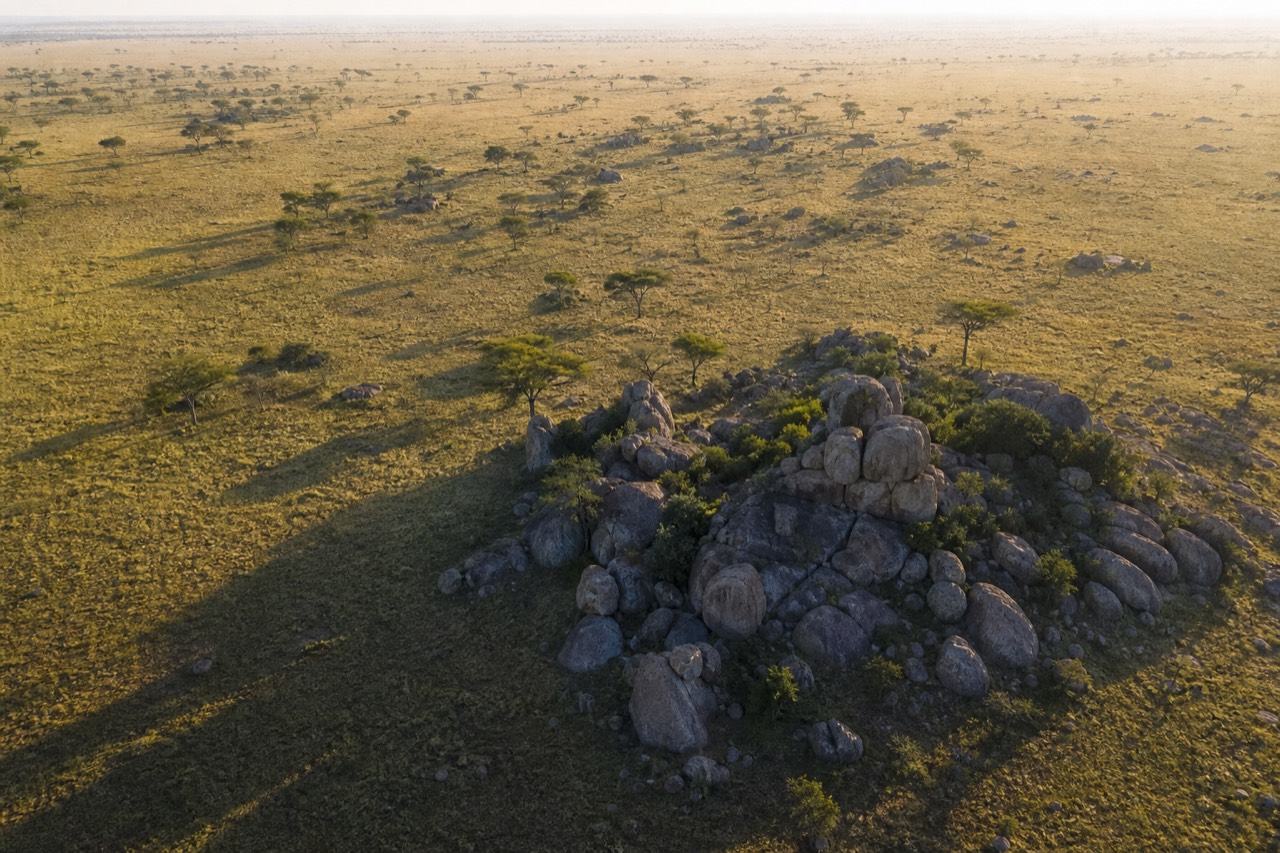
Stand on the northern Serengeti in late August and the herds moving past you will be in Kenya within a week. They do not know there is a border, and the grass is the same grass on both sides. This argument is really about scale, price and timing.
No. The Maasai Mara is not better than the Serengeti, and the Serengeti is not better than the Mara. The Mara is about 1,510 square kilometres of dense, easily covered reserve with a compressed July-to-October peak. The Serengeti is 14,763 square kilometres holding some part of the migration in every month of the year. Which one wins depends entirely on when you go and how long you have.
A balloon morning belongs to the country and camp route you choose; the Kenyan and Tanzanian departures are separate trips.
Booking choice: start with the Serengeti flight, then use the trip options to compare a Kenyan Mara morning. Explore the itinerary & inclusions
How do the two parks compare on size and space?
The Serengeti covers 14,763 km². The Maasai Mara National Reserve covers roughly 1,510 km², close to a tenth of it. That single number drives most of the real differences: drive times, how far apart camps sit, how many days you need, and whether the horizon in your photographs has anything in it.
The Mara's compactness is genuinely useful. On a four-day trip you cover a lot without spending half of it in a vehicle, and wildlife density per square kilometre is high. The Serengeti asks more. Camps sit far apart, transfers eat mornings, and the reward is a landscape that keeps unrolling long after you expect it to stop.
Both are halves of one ecosystem. The UNESCO listing for the Serengeti, inscribed in 1981, describes roughly 1.5 million hectares running contiguous with Ngorongoro to the south and the Mara to the north. Recent censuses put the wildebeest population near 1.38 million.
What does each one cost to enter?
Maasai Mara entry is $100 per non-resident adult per day from January to June and $200 per day from July to December, on a 12-hour ticket. Serengeti entry runs roughly $70 to $83 per adult per 24 hours under the latest published tariff, with no seasonal doubling. On a multi-day trip in high season, that gap is larger than any other line in the comparison.
| Fee line | Serengeti | Maasai Mara |
|---|---|---|
| Non-resident adult | roughly $70-83 per 24 hours | $100/day Jan-Jun, $200/day Jul-Dec |
| Children | set separately in the published tariff | $50 for ages 9-17, free under 8 |
| Ticket window | 24 hours | 12 hours, typically 6am to 6pm |
| Adjacent area | Ngorongoro, about $70.80 per adult per day plus a vehicle fee near $295 for the crater descent | conservancies, priced by the individual conservancy |
Kenya's pricing is deliberate. Narok County moved the Mara toward low volume and high value, and the doubling lands precisely in migration season. The ticket window matters as much as the rate: a Serengeti ticket runs a full 24 hours and covers an afternoon drive, a night and the next dawn, while a Mara ticket expires at dusk. Rates sit in TANAPA's published tariff and on the reserve's own fee page.
When is each park at its best?
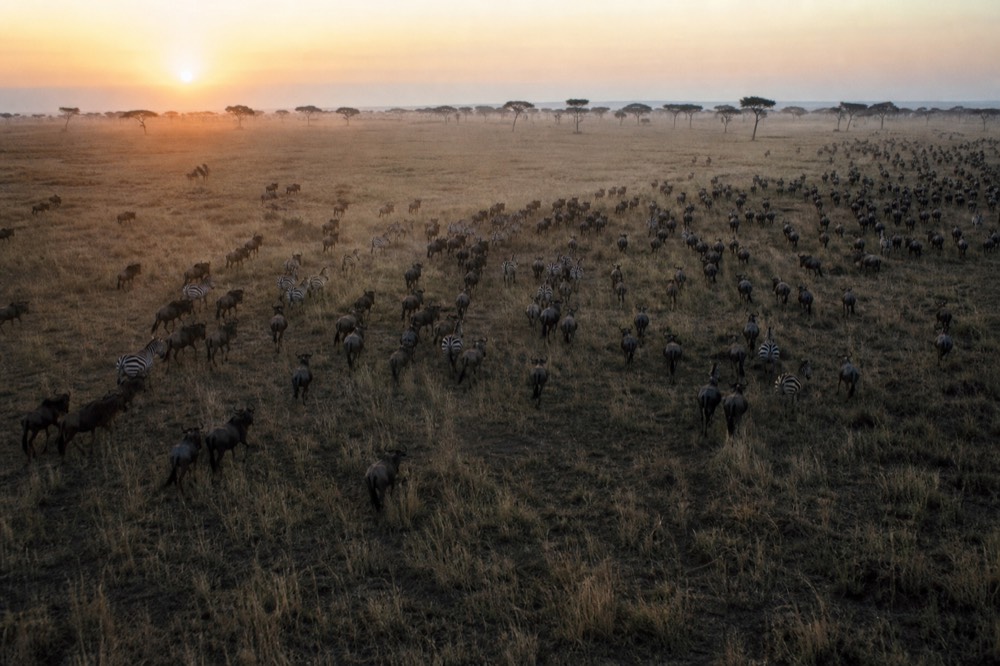
The Mara has one great season: July to October, when the herds are north and the river crossings happen. The Serengeti has no off month. January to March means calving on the southern short-grass plains at Ndutu, April and May the central plains, June the Western Corridor, July to October the north and the Mara River, then a slow move south through November and December.
That is the single strongest argument for Tanzania. If your holiday falls in February, a Mara trip is a good safari with resident game, and a Serengeti trip puts you in the middle of hundreds of thousands of wildebeest dropping calves on open grass. If your holiday falls in August, both work, and the choice comes down to price and crowds.
Migration timing slides by four to eight weeks year to year, so nobody can promise a crossing on a date. What you can plan is being in the right half of the ecosystem in the right month, as the best time to fly guide sets out.
Which one is more crowded?
The headline numbers point one way and the experience points the other. The Serengeti recorded about 491,398 visitors in 2025, up from roughly 430,000 the year before. The Mara recorded around 213,000, down from about 343,000 in 2024. The bigger park takes more than twice the people and spreads them across ten times the ground.
| Year | Serengeti visitors | Maasai Mara visitors |
|---|---|---|
| 2023 | about 389,000 | about 420,000 |
| 2024 | about 430,000 | about 343,000 |
| 2025 | about 491,398 | about 213,000 |
Kenya's fee rises worked as designed. Fewer vehicles, quieter sightings, a higher bill. If empty frames matter more than the total cost of the trip, the Mara delivers something the Serengeti's busy central circuit sometimes cannot.
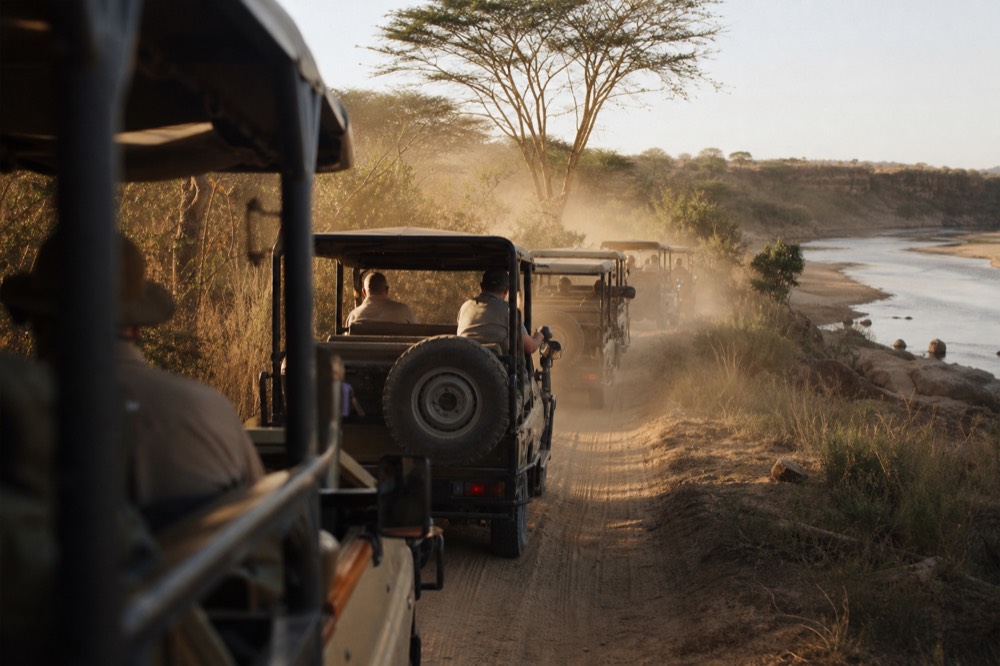
Crowding varies wildly within each park too. Seronera in the central Serengeti is busy; the Western Corridor and far north are not. Averages hide that completely.
So when does each one win?
The Mara wins on a short Kenya-based trip in July to October, when you want density without long drives. The Serengeti wins on any trip outside those months, on any trip longer than five days, and on cost once park fees are counted. If your itinerary already includes one of them, that is your answer.
Money settles more of this than people admit. Two adults spending four days in the Mara in September pay $1,600 in entry fees alone; the same four days in the Serengeti run near $560 to $664. That buys a balloon flight with change left over.
The balloon question is separate and has its own answer, because flight prices run the other way: a Serengeti flight starts from $599 with park entry billed separately by your safari, while the Kenyan equivalent runs roughly $450 to $585. That trade-off is worked through properly in the balloon-specific comparison. The short version is that a cheaper Kenyan basket sits over more expensive ground for half the year. Related reading: every bookable flight.
For the reputation rather than the arithmetic, what makes the Serengeti famous covers what this comparison skips.
Common questions
Is Maasai Mara better than Serengeti?
Neither is better outright. The Mara is smaller, denser and easier to cover in a few days, with one strong season from July to October. The Serengeti is nearly ten times the size and holds part of the migration every month of the year, at roughly $70 to $83 per adult per 24 hours against the Mara's $100 or $200 a day.
Which is cheaper, Serengeti or Maasai Mara?
The Serengeti, once park fees are counted. Tanzanian entry runs about $70 to $83 per non-resident adult per 24 hours with no seasonal change. Mara entry is $100 a day from January to June and $200 from July to December, on a ticket that expires at dusk rather than running a full day.
Can you see the great migration in both parks?
Yes, at different times. The herds spend most of the year inside Tanzania: calving at Ndutu January to March, the central plains April and May, the Western Corridor in June. They reach the north and the Mara River from July, then track back south from November.
Is a hot air balloon better in the Serengeti or the Maasai Mara?
The flights are similar in the air. Serengeti flights start from $599, with a champagne variant at $643, and park entry paid separately with your safari. The Kenyan equivalent runs roughly $450 to $585 over a park that charges $200 a day in high season. Fly wherever your safari already sleeps.
Choose the experience that fits your trip
General starting point; dates, pickup and passenger acceptance still need confirmation.
Choose the country you will stay in · alternatives & optional controls
- Maasai Mara balloon safari & champagne breakfast — Kenyan camp pickup, about 70 minutes in the air and breakfast; allow the whole morning for transfers. Ages 8+. Excludes far-west camps including Mara Serena and Neptune Mara Rianta. Not wheelchair accessible; confirm health and pickup suitability. No Tanzania transfer.
Serengeti Balloon Safaris: dawn flight & breakfast
Have your travel dates? Check the itinerary and final price before fixing the rest of your trip.
About five hours including transfers, sunrise flight and bush breakfast. Park entry is extra. Ages 7+. Camp pickup and weight acceptance must be confirmed; no pregnancy, significant back or heart conditions.
Check dates & final price on Viator