Why is the Serengeti so famous?
UNESCO-listed since 1981, host to the largest unaltered land mammal migration on earth, and named by the Maasai for plains that appear to have no end.
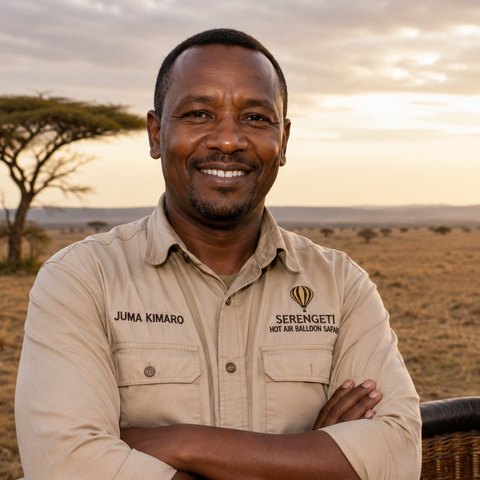 By Juma Kimaro, Serengeti balloon safari specialist since 2015
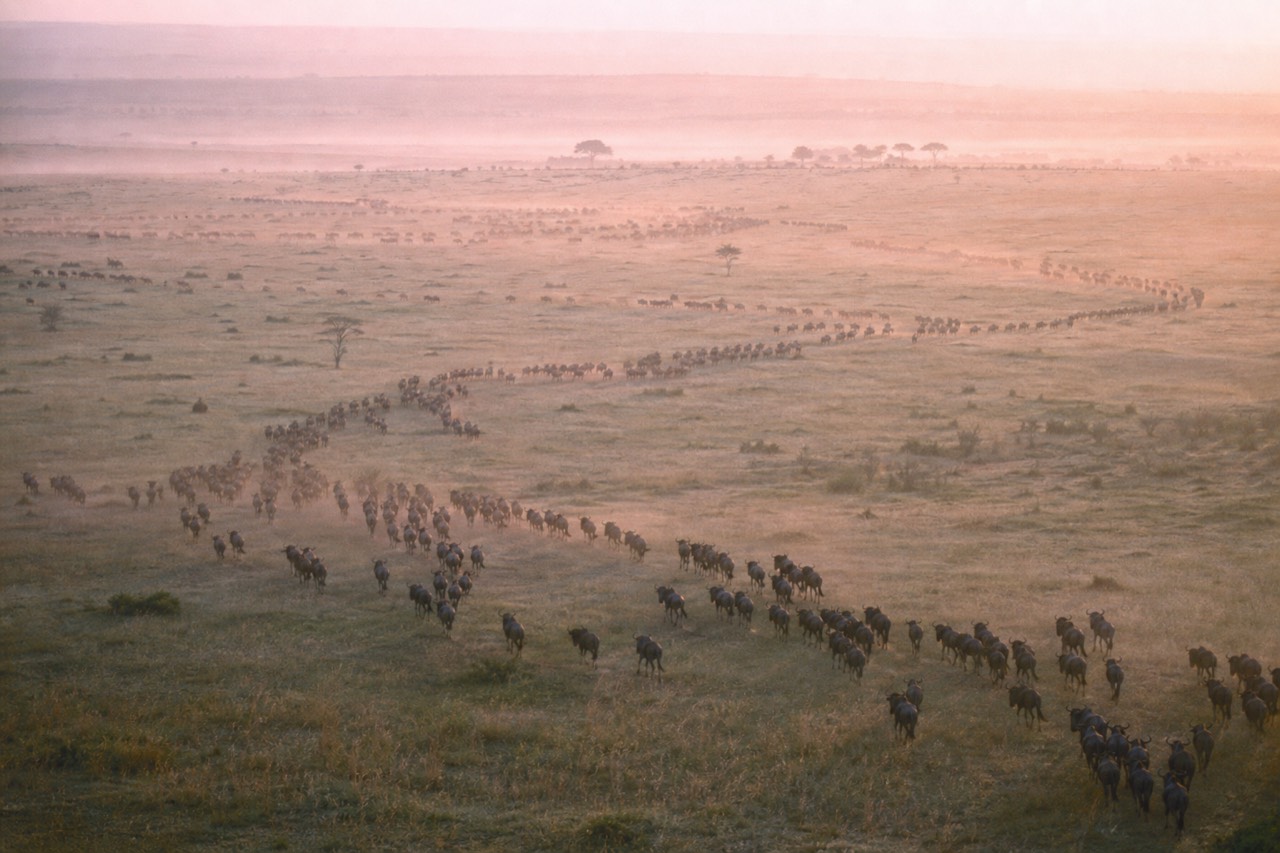
Fame in wildlife tourism usually rests on one animal or one photograph. The Serengeti's rests on arithmetic. Somewhere between a million and two million wildebeest walk a circuit through it every year, dragging lions, hyenas and crocodiles behind them, and the whole thing has run uninterrupted for as long as anyone has been counting. That is not a marketing line. It is why the place carries a World Heritage listing.
An aerial safari offers another way to appreciate the scale of those plains, with wildlife sightings left to the day.
Booking choice: explore the SBS sunrise flight and bush breakfast as part of your Serengeti stay. Explore the itinerary & inclusions
What actually made the Serengeti famous?
Four things stack up: a UNESCO World Heritage listing since 1981, the largest unaltered land mammal migration left on the planet, a Maasai name that translates roughly as endless plains, and seventy years of research and documentary film that put both in front of a global audience.
Scale is the first thing to understand. The park covers 14,763 square kilometres and sits inside a larger intact ecosystem running unbroken into the Ngorongoro area and across the Kenyan border into the Masai Mara. Its northern neighbour is a tenth of the size, which explains much of how each place feels on the ground.
| Measure | Serengeti National Park | Masai Mara National Reserve |
|---|---|---|
| Area | 14,763 sq km | ~1,510 sq km |
| Reported visitors, 2025 | ~491,398 | ~213,000 |
| Non-resident adult day fee | ~$70 base, ~$83 with VAT | $100 Jan to Jun 2026, $200 Jul to Dec |
| Dawn balloon flight, from | $599, park entry billed separately | ~$450-585 |
What does the UNESCO listing actually say?
The Serengeti was inscribed in 1981 under natural criteria seven and ten, covering roughly 1.5 million hectares of savannah. The citation singles out the annual migration of 1.5 to 2 million wildebeest, together with hundreds of thousands of zebra and gazelle and the predators that follow them, as one of the most impressive natural spectacles anywhere.
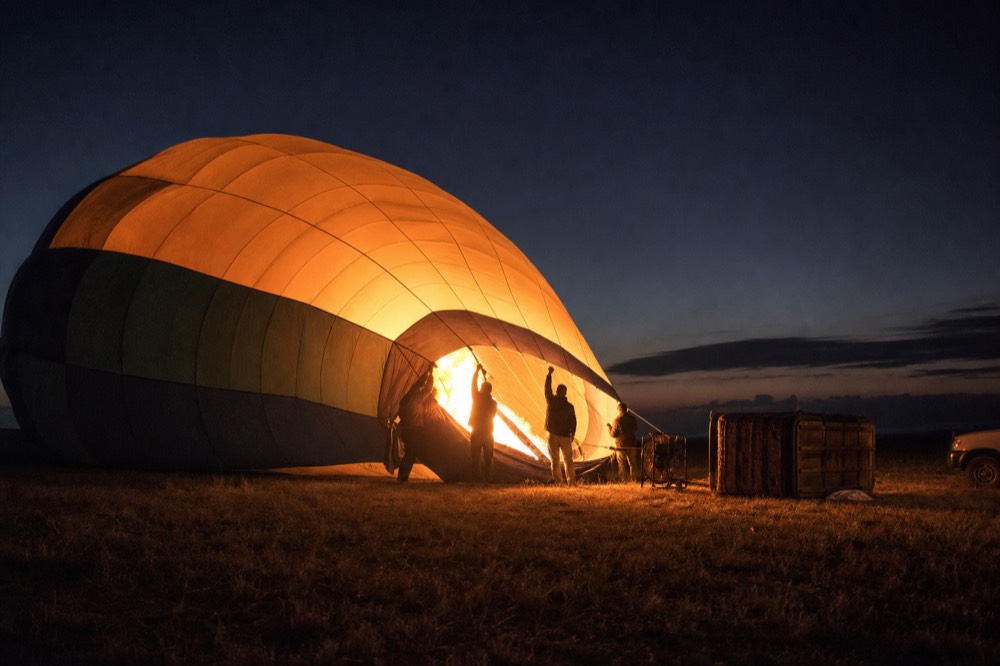
Criterion seven covers natural phenomena of exceptional beauty. Criterion ten covers habitats holding significant biological diversity. Qualifying on both at once is rarer than it sounds. The UNESCO World Heritage entry rewards reading in full, because it makes the ecological case rather than the scenic one and treats the migration as a system rather than an event.
How big is the migration, really?
The figure most often quoted is 1.5 to 2 million wildebeest, which comes from the UNESCO description. Recent aerial censuses put the herd nearer 1.38 million and have held roughly stable across surveys. Some satellite-based work from 2022 and 2023 suggested lower numbers, and that debate has not fully settled.
| Measure | Figure | What it means on the ground |
|---|---|---|
| Wildebeest, UNESCO description | 1.5 to 2 million | The headline number behind the listing |
| Wildebeest, recent aerial census | ~1.38 million | Stable across surveys; satellite work has raised questions |
| Travelling companions | Hundreds of thousands of zebra and gazelle | Same circuit, not a separate event |
| Circuit length | 650+ km straight line, longer on the ground | The herds sit somewhere different most months |
| Peak crossing month | August, the most active on record | 2026 crossings logged on 15, 20 and 21 August |
Being honest about the census gap matters more than picking the biggest number. What is not in dispute is the label: the largest unaltered large-mammal migration on earth, unaltered meaning no fence, road or farm cuts the route along its length. Live crossing reports track where the herds sit week to week, which beats any average for planning.
Where does the name come from?
Serengeti comes from the Maasai, and translates roughly as endless plains or the place where the land runs on forever. The name is descriptive rather than poetic. Standing on the southern short-grass plains in February, with no tree between you and the horizon in any direction, it reads as a literal survey note.
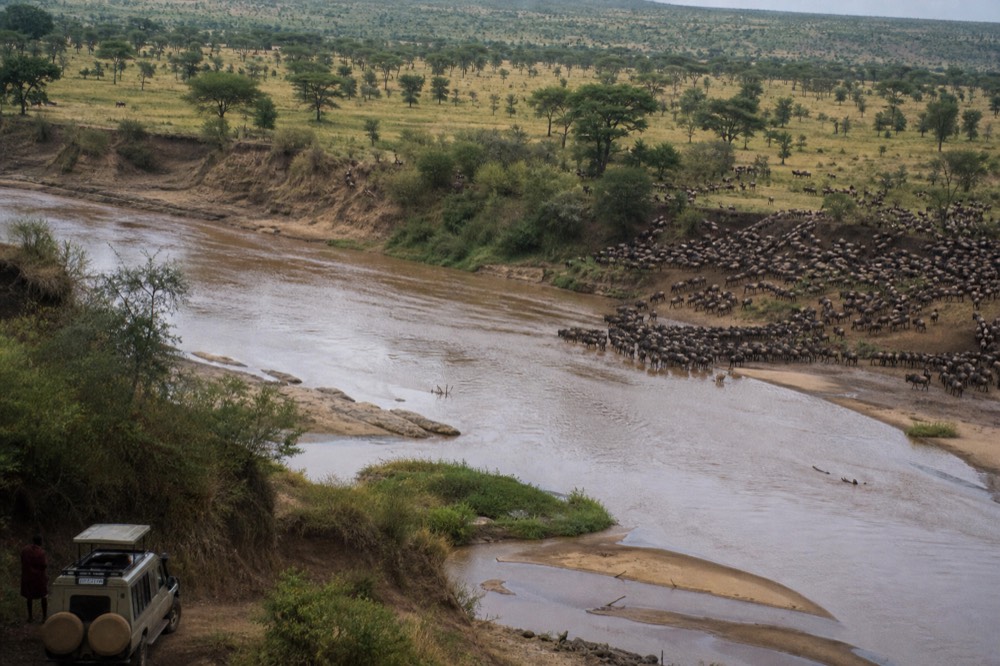
That flatness is not uniform. The southern plains are volcanic ash grassland, the centre carries acacia woodland and granite outcrops, the west narrows into a river corridor, and the north rises into hills before the Mara River. Four kinds of country under one name, which is why a three-night visit and a ten-night visit produce such different reports.
Why do so many documentaries film here?
Because the Serengeti became a scientific subject before it became a destination. Bernhard Grzimek's Serengeti Shall Not Die put the ecosystem in front of a worldwide audience in 1959, and decades of continuous ecological research since then have given film crews something almost no other wilderness offers: known animals, known routes, and predictable drama.
Long-running research programmes mean the migration route, the calving window and the crossing points are documented year after year rather than guessed at, so a crew can plan a shoot around them. The reliability compounds: every film sends more visitors, more visitors fund more conservation and research, and the record gets deeper. The park logged about 491,398 visitors in 2025, ahead of the Masai Mara for the third year running.
The calendar is the practical takeaway. Seeing the herds from the air breaks the year into what is visible each month, and the crater versus the plains covers the other half of the northern circuit decision.
What does famous look like from a balloon at dawn?
Different from ground level, and that is the point. From altitude the pattern becomes legible: herd columns as long dark lines, game trails cut into the grass, river bends where the crossings happen. Flights run 50 to 70 minutes from $599 per person, with park entry billed separately through your safari.
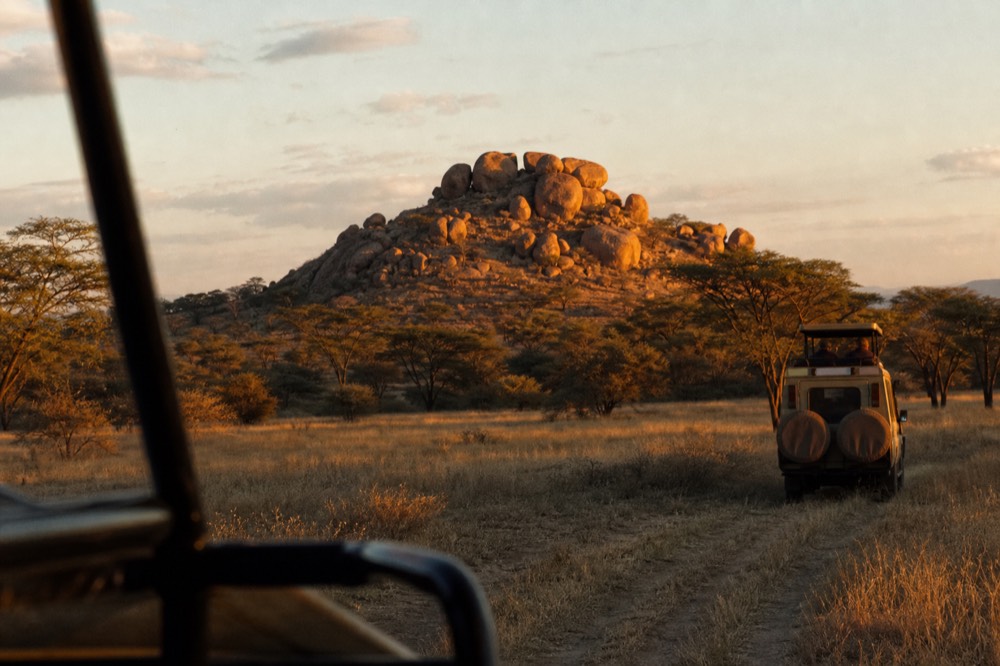
A vehicle gives you an animal. A basket gives you the system that animal belongs to, which is what the UNESCO citation and every documentary have been describing. Four flights are bookable, and you can compare every dawn flight over the plains before choosing. Timing matters more than operator choice, and which month to book a flight sorts that out.
Questions people ask about the Serengeti
What is the Serengeti best known for?
The annual wildebeest migration, which UNESCO describes as 1.5 to 2 million animals moving with hundreds of thousands of zebra and gazelle, followed by lions, hyenas and crocodiles. It is the largest unaltered land mammal migration on earth: no fence, road or farm cuts its 650-kilometre-plus circuit.
Is the Serengeti a UNESCO World Heritage Site?
Yes, inscribed in 1981 under natural criteria seven and ten, covering roughly 1.5 million hectares of savannah plains. Criterion seven recognises exceptional natural beauty, criterion ten significant biological diversity. Qualifying under both at once is uncommon, and the citation names the migration as one of the most impressive natural spectacles in the world.
What does the word Serengeti mean?
It comes from the Maasai and translates roughly as endless plains, or the place where the land runs on forever. The name describes the southern short-grass plains, where volcanic ash soil supports grassland with almost no trees. Elsewhere you find acacia woodland, granite outcrops, a river corridor in the west and hills in the north.
Can you see the migration from a hot air balloon?
Yes, when the herds are under the launch site. Balloons fly from Seronera year-round, from Ndutu between late December and mid-March for the calving, from the Western Corridor June to October and from Kogatende in the north July to October. Fares start at $599 per person, park entry paid separately through your safari.
How many wildebeest are in the Serengeti?
The UNESCO listing describes 1.5 to 2 million. Recent aerial censuses put the number nearer 1.38 million, roughly stable across surveys. Satellite-based studies from 2022 and 2023 suggested lower figures, so treat any single number as an estimate rather than a headcount. The scale is not in question.
Choose the experience that fits your trip
General starting point; dates, pickup and passenger acceptance still need confirmation.
Fit the flight into your safari day · alternatives & optional controls
- Nyssa: Seronera flight & luxury bush breakfast — Five-hour central Serengeti morning with camp pickup, breakfast and washrooms at launch and breakfast. Finishes at Serengeti Visitor’s Centre. Park entry and outside-park transfers excluded. No pregnancy, back problems, recent surgery or wheelchair use. Confirm child eligibility directly.
Serengeti Balloon Safaris: dawn flight & breakfast
Have your travel dates? Check the itinerary and final price before fixing the rest of your trip.
About five hours including transfers, sunrise flight and bush breakfast. Park entry is extra. Ages 7+. Camp pickup and weight acceptance must be confirmed; no pregnancy, significant back or heart conditions.
Check dates & final price on Viator