Do they weigh you before a hot air balloon ride?
Serengeti balloon operators plan on an 80 kg average and ask anyone over 120 kg to declare it at booking. Weighing procedures and acceptance depend on the operator.
 By Juma Kimaro, Serengeti balloon safari specialist since 2015
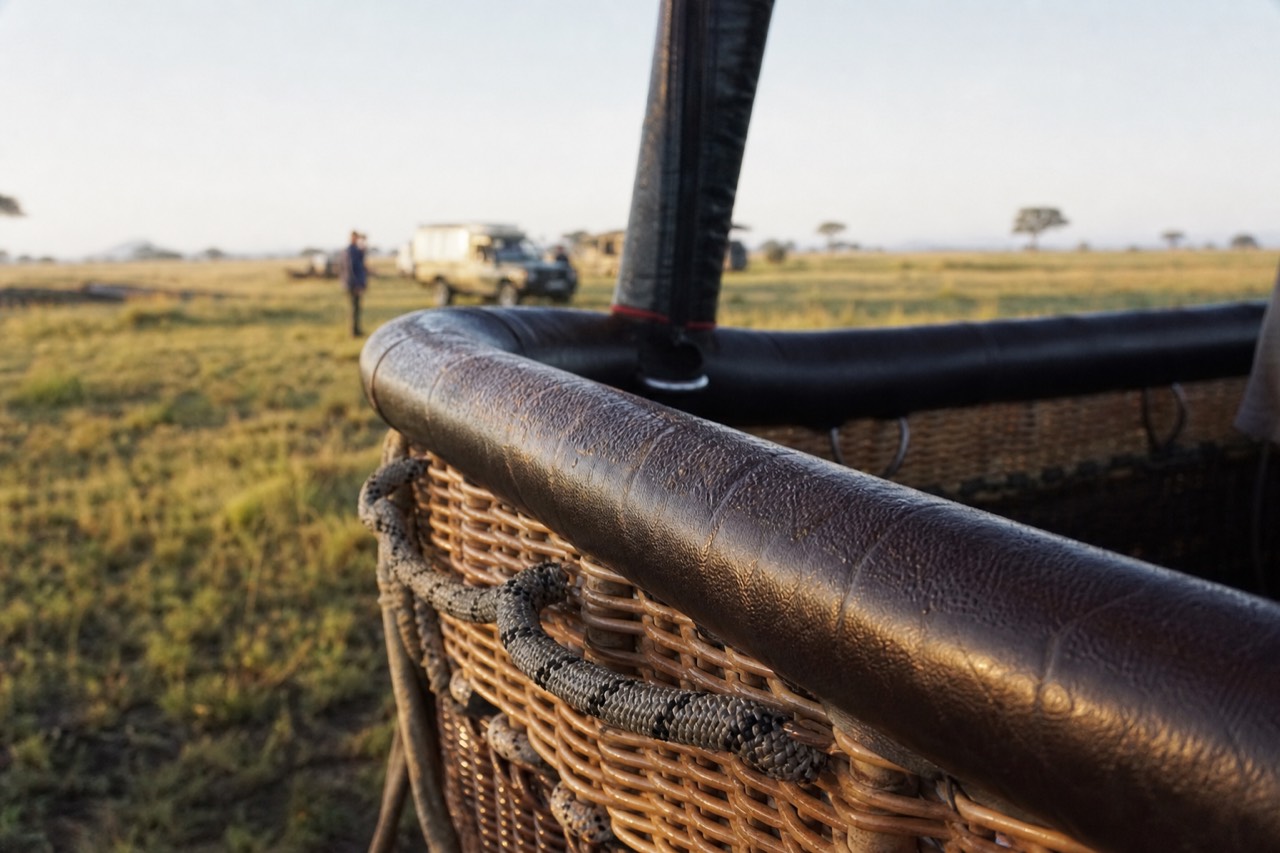
At a Serengeti launch field, the pilot and crew need an accurate load calculation. That includes passengers, fuel and equipment, so your declared weight is part of planning the flight.
If you are considering a flight, compare the passenger rules before committing to a date.
Booking choice: SBS pairs a sunrise flight with bush breakfast; confirm weight acceptance and any extra-place charge before paying. Explore the itinerary & inclusions
Is there a scale at the launch field?
You may be asked for your weight before a balloon flight; whether a scale is used depends on the operator. Declare it accurately before booking. SBS uses an 80 kg planning average and may require two places above 120 kg; Miracle’s linked Viator listing excludes passengers above 120 kg.
Some operators use declared weights and some may check them. A shared basket does not remove the need for accurate passenger weights; confirm the procedure with the operator.
Why does the basket care what you weigh?
Lift is finite. A balloon rises because the air inside the envelope is hotter, and therefore lighter, than the air outside, and how much weight that difference can carry depends on envelope volume, outside air temperature and altitude. The pilot budgets total load against that, which is why an average per head exists at all.
The Serengeti compounds it. The plains sit high enough that the air is thinner than at sea level, and it warms fast once the sun is up, both of which trim available lift. One more reason flights go at dawn and not at nine.
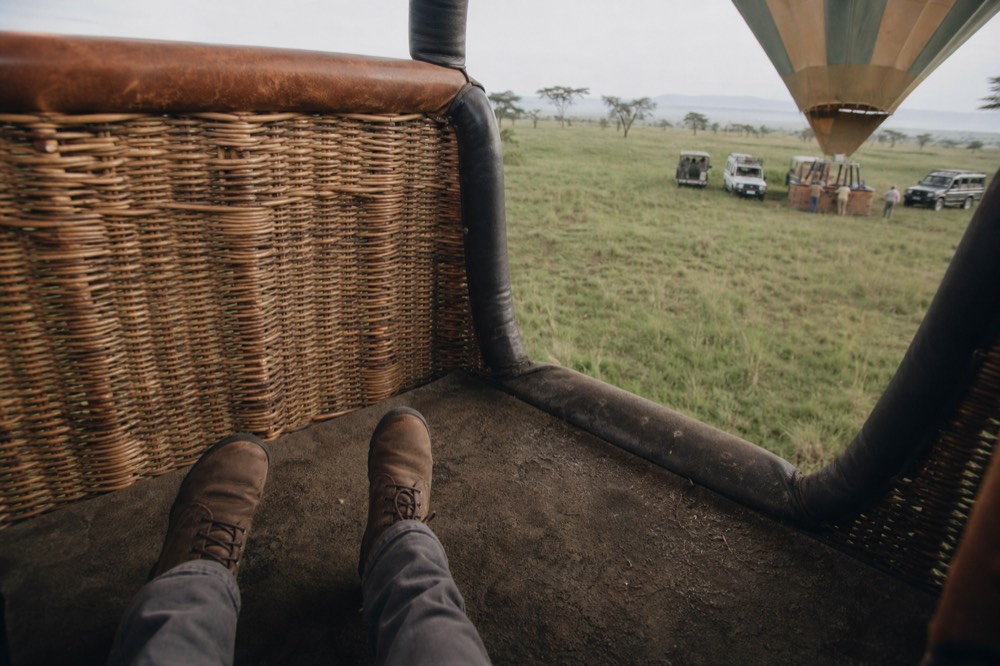
The second constraint is geometry rather than lift. A basket is split into compartments, each sized for a set number of adults standing shoulder to shoulder. Anyone who needs more than one person's footprint is a space problem, not a lift problem, and that is what the second-place option solves.
| What operators use | The figure | What it means for you |
|---|---|---|
| Planning average per passenger | 80 kg (about 176 lb) | How lift is budgeted before anyone reaches the field |
| Declaration threshold | 120 kg (265 lb, about 19 stone) | Above this, tell the operator when you book |
| What applies above it | Operator-specific acceptance | SBS may charge for two places; Miracle’s linked listing excludes over 120 kg |
| Where the question is asked | At booking, by form or email | Before booking; the operator may verify weight before flight |
| Who it applies to | Both long-established Serengeti operators | Newer listings: check the page carrying your booking |
What happens if you weigh more than 120 kg?
Do not assume you can fly by paying extra. SBS may require a second place, but Miracle’s linked Viator listing excludes passengers above 120 kg. Confirm acceptance and the total charge before paying.
Serengeti Balloon Safaris states the 120 kg line in its published rules, alongside the 80 kg planning average, and Miracle Experience publishes its own passenger terms in its own terms.
If you are near the line, declare it. The downside of over-declaring is a conversation and possibly a refund. The downside of under-declaring is standing in a field at 5:30am watching a balloon leave without you, on a non-refundable booking, four hours from your camp.
Do you get strapped into a hot air balloon?
Restraint systems vary. SBS says its passengers wear safety restraints, so do not assume there will be no harness. You generally stand in a compartment; follow the operator’s boarding and landing briefing.
A landing can involve forward movement, a skid or a tipped basket. Use the restraint and landing position specified by the pilot; do not change them based on advice for another basket.
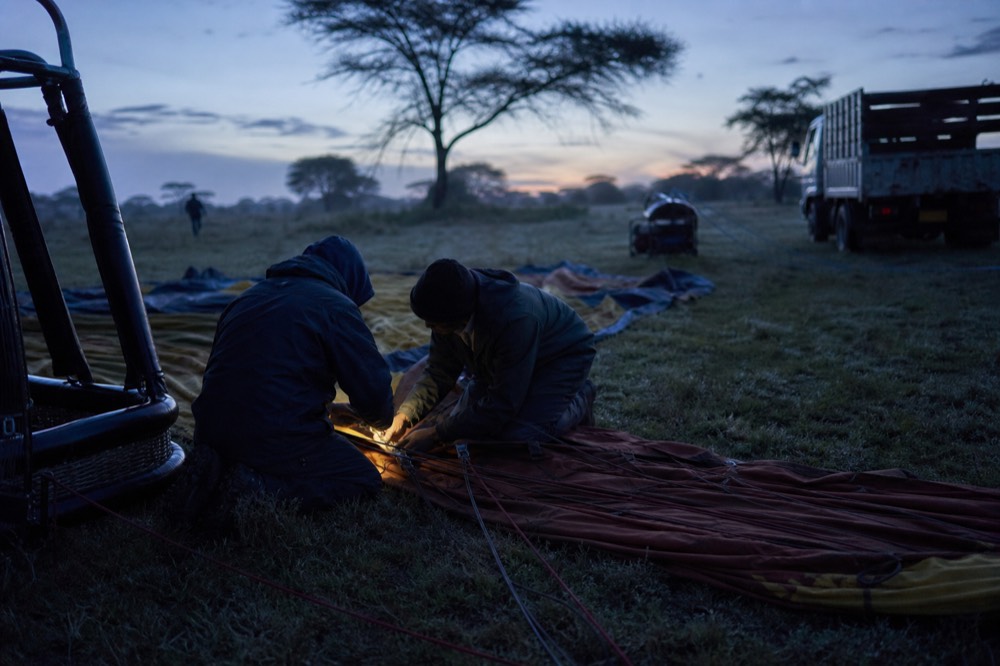
The landing position is briefed before boarding: follow the pilot’s instructions on where to face, how to brace and which handles to hold; secure loose items. Hands stay inside the rim on approach. Stay in the basket after it stops until the pilot says otherwise, since an envelope can catch a gust and pull again.
The flagship Serengeti Balloon Safaris morning briefs the same sequence and holds 4.9 across 3,504 reviews, more than any other balloon listing in the park. From $599 per person, with Serengeti park entry fees paid separately alongside your safari. Related reading: full account of how the safety rules work.
What should you declare, and when?
Weight over 120 kg, pregnancy, any serious heart, back, bone or mobility condition, and the ages of any children. All of it belongs on the booking form, not at the launch field. Confirm acceptance and the cancellation terms before paying; early disclosure does not guarantee that the operator can accommodate you.
Age is what people get wrong most often, because the operators genuinely differ: SBS’s direct FAQ says six, but its linked Viator product starts at seven. Miracle’s linked product has a child band from five and excludes anyone under 120 cm; confirm acceptance and the child price for your booking, which the family rundown on age and weight rules for kids works through. Pregnancy is a flat exclusion at both, not a trimester question, and the reason is the landing rather than the altitude, covered in the answer on ballooning while pregnant. For how this sits inside the wider morning, the hour-by-hour walk through the flight has the sequence, and you can compare all four bookable flights on what each includes.
Common questions
Do they weigh you before a hot air balloon ride?
Weighing procedures vary. Declare your weight accurately before booking; SBS may charge for two places above 120 kg, while Miracle’s linked Viator listing excludes passengers above that weight.
Do you get strapped into a hot air balloon?
Restraint systems vary; SBS’s current FAQ says it uses passenger restraints. Follow the pilot’s instructions for your basket, including where to face and how to brace for landing.
Is there a weight limit for Serengeti balloon flights?
It depends on the listing. Miracle’s linked Viator flight excludes over 120 kg. SBS may charge for two places, but acceptance must be confirmed before booking.
Who should not go on a hot air balloon ride?
Anyone pregnant, anyone who cannot climb unaided into a chest-high basket, and anyone with a serious heart condition, brittle bones, or a neck or back problem a firm landing could aggravate. Children below the operator's age floor cannot fly at all.
Does a Serengeti balloon flight cost more if you are over 120 kg?
Sometimes. SBS may charge for two places above 120 kg; Miracle’s linked Viator listing excludes passengers above that weight. Standard flights start at $599 per person with Serengeti park entry paid separately alongside your safari, so the supplement sits on top.
Choose the experience that fits your trip
General starting point; dates, pickup and passenger acceptance still need confirmation.
Check the morning’s practical fit · alternatives & optional controls
- Miracle Experience: balloon safari & bush breakfast — About five hours with camp transfers, tea/coffee, flight, breakfast and binoculars. Park entry and outside-park transfers excluded. Listing excludes under 120 cm and over 120 kg; child booking bands start at 5, but acceptance requires operator confirmation. No pregnancy or significant back/heart conditions.
- Nyssa: Seronera flight & luxury bush breakfast — Five-hour central Serengeti morning with camp pickup, breakfast and washrooms at launch and breakfast. Finishes at Serengeti Visitor’s Centre. Park entry and outside-park transfers excluded. No pregnancy, back problems, recent surgery or wheelchair use. Confirm child eligibility directly.
Serengeti Balloon Safaris: dawn flight & breakfast
Have your travel dates? Check the itinerary and final price before fixing the rest of your trip.
About five hours including transfers, sunrise flight and bush breakfast. Park entry is extra. Ages 7+. Camp pickup and weight acceptance must be confirmed; no pregnancy, significant back or heart conditions.
Check dates & final price on Viator