How much does a 7 day safari cost in Tanzania?
A week in Tanzania runs about $1,250 on shared camping to $8,000 at the top. The budget ladder, the park fees nobody quotes, and where a balloon fits.
 By Juma Kimaro, Serengeti balloon safari specialist since 2015
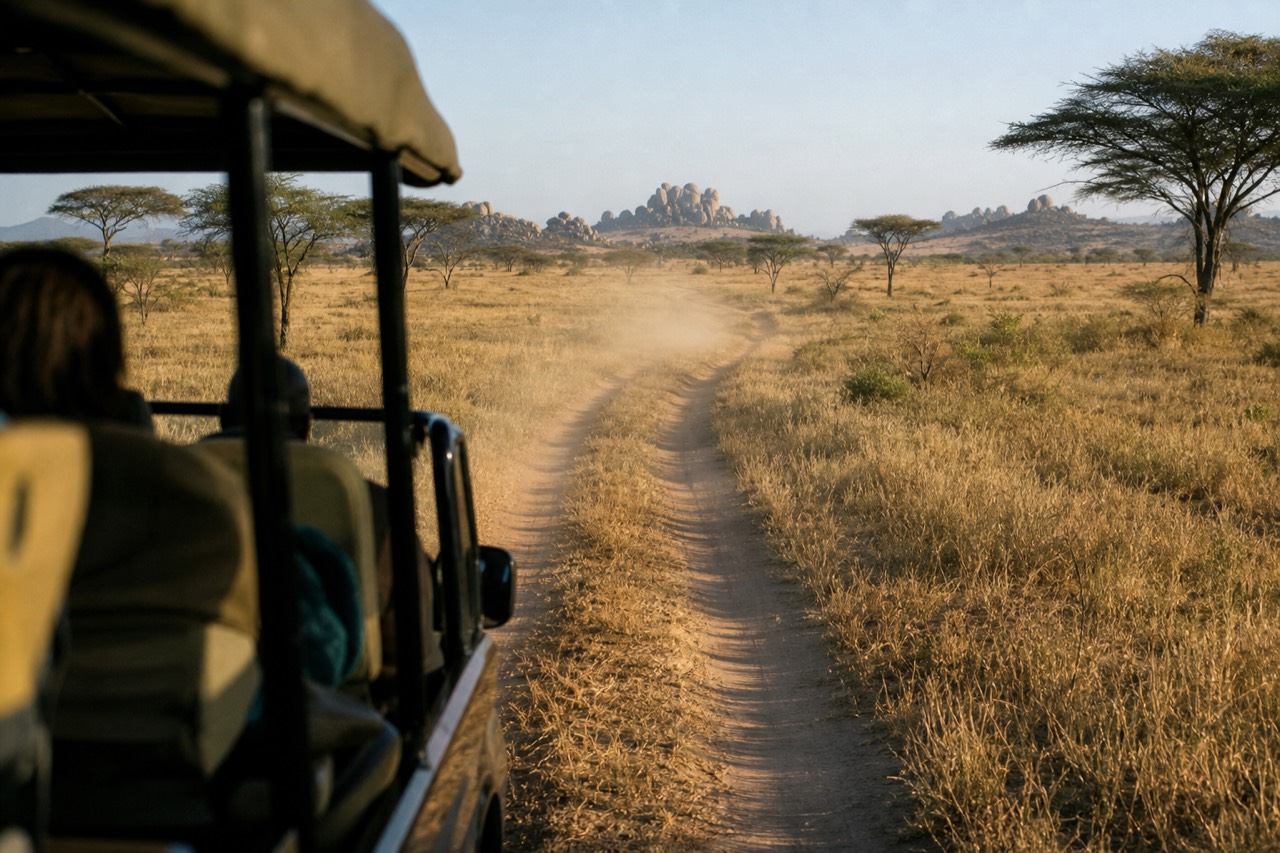
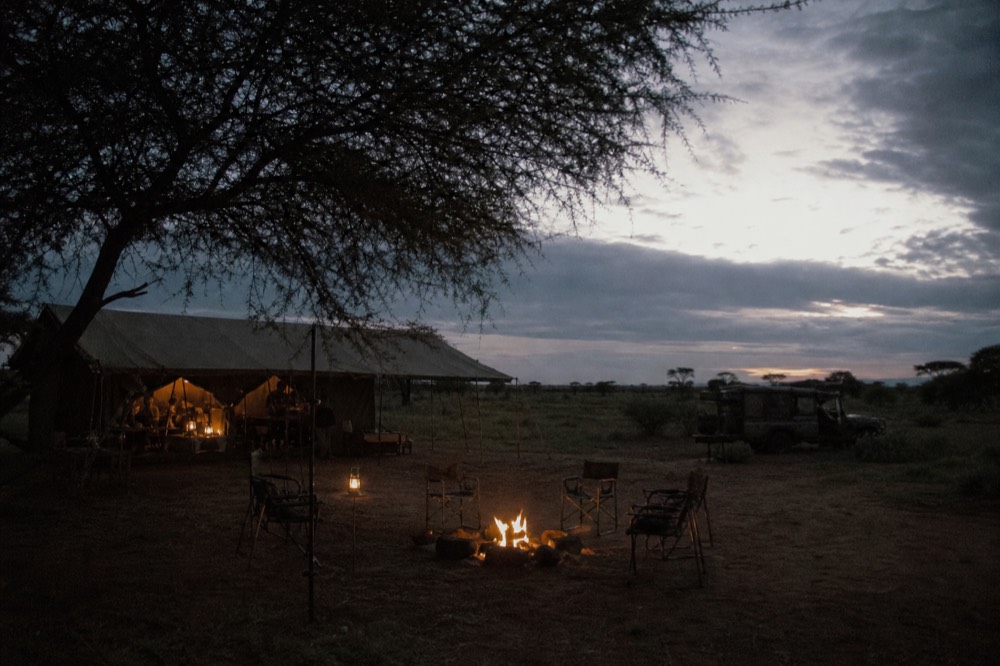
Coffee at 5:40 in a canvas mess tent, engine already ticking over outside, and the day's largest fixed expense has not been mentioned once: the park gate. Tanzania prices a safari in layers, and the gap between the cheapest honest week and the priciest is wide enough to buy a second trip.
Compare a complete seven-day itinerary before adding up separate nights, drives and park fees.
Booking choice: this private northern-circuit safari includes six nights, a vehicle and listed park visits; lodging level changes the quote. Explore the itinerary & inclusions
What does a week on safari in Tanzania actually cost?
Seven days runs roughly $1,250 to $2,500 per person on a shared camping trip, about $2,500 to $4,200 in comfortable mid-range camps and lodges, and $5,000 to $8,000 or more at the luxury end. The daily rates behind those totals sit near $250 to $400, $350 to $700, and $700 upward.
Those are per-person land-package figures: vehicle, guide, beds, meals, and in most quotes the park fees too. International flights sit outside them. Northern circuit itineraries cluster between $2,000 and $7,000 per person.
| Tier | Where you sleep | Per person per day | Seven days, per person |
|---|---|---|---|
| Budget, shared camping | Dome tents in public campsites, a seat in a group vehicle | $250-400 | $1,250-2,500 |
| Mid-range | Permanent tented camps and lodges, shared or private vehicle | $350-700 | $2,500-4,200+ |
| Luxury | Small owner-run camps, private guide, an occasional fly-in leg | $700+ | $5,000-8,000+ |
The two right-hand columns do not multiply out neatly, and that is normal. Day one and day seven are mostly road and airport, operators shave the rate on longer bookings, and a quoted "from" price assumes two people sharing a room.
What actually moves the number?
Four levers do most of the work: when you travel, how many gates you pass through, what you sleep in, and whether the vehicle is yours or shared with strangers. Season alone reprices a camp between the long rains and the July peak. Extras like a balloon morning or the crater descent stack on top of all of it.
| Lever | Cheap end | Expensive end |
|---|---|---|
| Season | Long rains, March to May | July to October dry season, plus Christmas |
| Parks | Fewer gate days, nights outside the boundary | Serengeti and Ngorongoro back to back, charged daily |
| Lodging | Public campsites, simple lodges near the gates | Small camps deep in the park, fly-in legs |
| Vehicle | A seat in a shared vehicle with six others | Private vehicle and guide for your group alone |
| Extras | None | Balloon flight, walking safari, crater descent |
Park entry is the layer people underestimate. Under the latest published tariff from Tanzania's national park authority a non-resident adult pays about $70 for a 24-hour Serengeti ticket, nearer $83 once 18 percent VAT is applied, with children of five to fifteen around $20 before tax. The Ngorongoro Conservation Area is administered separately: roughly $70.80 per adult per day, plus a mandatory vehicle fee of about $295 to descend onto the crater floor, where the clock runs six hours. Read the published tariff schedule before you accept a quote, not after.
What does a real seven-day week look like on paper?
Unbundled, a mid-range week for one traveler looks like roughly $2,450 to $4,900 in daily rates, $210 to $250 in Serengeti entry across three park days, about $120 for a crater day, $599 if you add a balloon morning, $50 to $100 for the visa, and $70 to $140 in tips.
| Line item | Assumption | Per person |
|---|---|---|
| Nights 1 to 6, all-inclusive camps and lodges | $350-700 per day, mid-range tier | $2,450-4,900 |
| Serengeti entry, three park days | ~$70 base, ~$83 with VAT, per adult per 24 hours | $210-249 |
| Ngorongoro day plus crater descent | ~$70.80 plus ~$295 per vehicle, split six ways | ~$120 |
| Balloon flight, one morning | $599 per person, park entry not included | $599 |
| eVisa | $50 single entry, $100 multiple entry for US passports | $50-100 |
| Tips across seven days | $10-20 per person per day, discretionary | $70-140 |
| International flights | No direct US service, one stop, 18 to 24 hours | Varies |
Most operators fold the first three lines into a single all-inclusive daily rate. Pulling them apart does not create extra money to find. It shows which parts of the quote are set by the government and which parts your operator can genuinely move.
Where does a $599 balloon flight sit in that budget?
A $599 seat is about one seventh of a $4,200 mid-range week and closer to a tenth of a $6,000 luxury one. On a $2,000 camping trip it is nearly a third of the total, which is why budget travelers tend to treat it as the single splurge rather than one line among several.
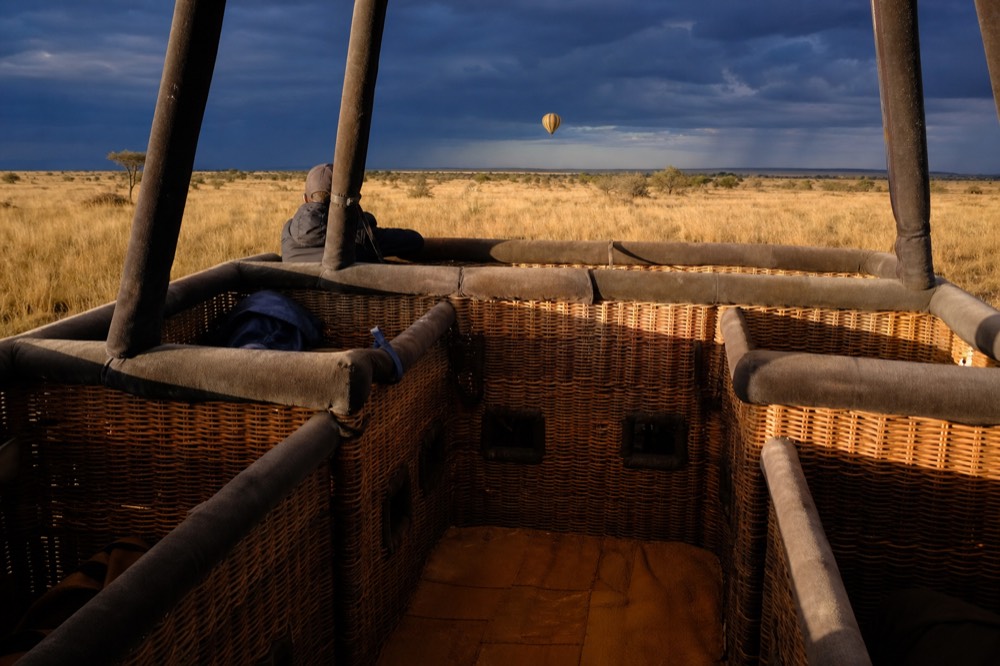
Three of the four bookable flights start at $599 and the champagne version runs $643. The fare covers camp pickup, 50 to 70 minutes airborne, a sparkling-wine toast on landing and a cooked bush breakfast in the grass. Serengeti park entry is not inside it. That fee travels with your safari, billed alongside the rest of your gate days, so the flight price is genuinely additive rather than a repackaged park charge. The operator's own FAQ sets out what the fare includes. Measured against what balloon rides cost around the world, a Serengeti seat sits at the very top of the ladder, roughly four times the going rate in Cappadocia.
See all four flights side by side, or let the dawn flight price breakdown work through the fare line by line.
Can you cut the week down without gutting it?
Yes, and the real savings are structural rather than fiddly. Travel in the long rains, share a vehicle, sleep outside the park boundary on the first and last nights, and drop one park instead of trimming a day from each. Skipping the crater descent alone saves a vehicle fee of about $295.
Shaving the balloon is usually the wrong cut. The same flight in Kenya's Masai Mara runs roughly $450 to $585, but Kenya charges $100 per adult per day in the first half of 2026 and $200 in the second, so the cheaper-looking alternative rarely stays cheaper. If the question is which park to drop, the crater weighed against the plains covers what each gives you. If timing is your lever, the month-by-month flying calendar shows which weeks pair low rates with herds under you, and whether the flight earns its price puts the case against it too.
Questions travelers ask before booking a week
How much does a Serengeti safari cost?
Budget roughly $250 to $400 per person per day for shared camping, $350 to $700 for mid-range camps and lodges, and $700 upward at the luxury end. Serengeti entry adds about $70 per adult per 24 hours before VAT, nearer $83 with it, normally inside an operator's all-inclusive quote.
Are park fees included in a Tanzania safari price?
Usually yes for a packaged safari, and you should ask outright. Gate fees run about $70 to $83 per adult per Serengeti day, plus roughly $70.80 and a $295 vehicle charge for a crater descent. Balloon flights are the exception: park entry is never bundled into the $599 fare.
How much is a hot air balloon ride over the Serengeti?
Three of the four bookable flights start at $599 per person and one runs $643 with a champagne breakfast. That buys camp pickup, 50 to 70 minutes airborne, a sparkling-wine toast and a cooked bush breakfast. Park entry sits outside it, paid with your safari. All four cancel free up to 24 hours ahead.
What is the cheapest time of year for a Tanzania safari?
The long rains from March to May are low season, and camps discount hardest then. Roads soften, some seasonal camps close, and the herds sit in the central Serengeti rather than at a river crossing. Balloons still fly from Seronera year-round, weather permitting.
Choose the experience that fits your trip
General starting point; dates, pickup and passenger acceptance still need confirmation.
Compare your week’s route and lodging · alternatives & optional controls
- Seven-day group safari with camping nights — Seven-day joining safari from Arusha with airport transfers, four parks and listed meals/fees. Maximum six travelers. Despite the listing’s lodge wording, the day-by-day itinerary names public campsites for Serengeti and Ngorongoro nights: confirm accommodation before paying. No pregnancy or back problems. Flights, visas, insurance and tips excluded.
- Ngorongoro Crater day trip from Arusha — Ten-hour shared day trip with English-speaking guide, picnic lunch and park fees. Pickup within about 7–10 km of Arusha CBD; longer distances cost extra. Returns after the day trip. Not recommended during pregnancy.
- Serengeti Balloon Safaris: dawn flight & breakfast — About five hours including transfers, sunrise flight and bush breakfast. Park entry is extra. Ages 7+. Camp pickup and weight acceptance must be confirmed; no pregnancy, significant back or heart conditions.
Tanzania Classic: seven-day private safari
Have your travel dates? Check the itinerary and final price before fixing the rest of your trip.
Seven days with a private vehicle and English-speaking guide; six nights, park fees and listed meals included. Arusha arrival, Manyara, Serengeti, Ngorongoro and Tarangire. Lodging tier changes the quote. Flights, visas, insurance and tips extra. Not recommended during pregnancy or for poor cardiovascular health.
Check dates & final price on Viator